
Regulated firms across the GCC typically operate within clearly defined approval structures. Delegation of authority frameworks are documented, internal systems are configured to capture approvals, and policies outline how decisions should be taken and recorded.
On the surface, governance appears structured.
Supervisory reviews across jurisdictions such as the UAE and Saudi Arabia are increasingly focused on a different question.
In a growing number of inspections, regulators are identifying a disconnect between formal approval systems and the way decisions occur in practice. Decisions are recorded within systems, but agreed through informal channels beforehand.
This distinction between where a decision is documented and where it originates is becoming a key area of supervisory attention.
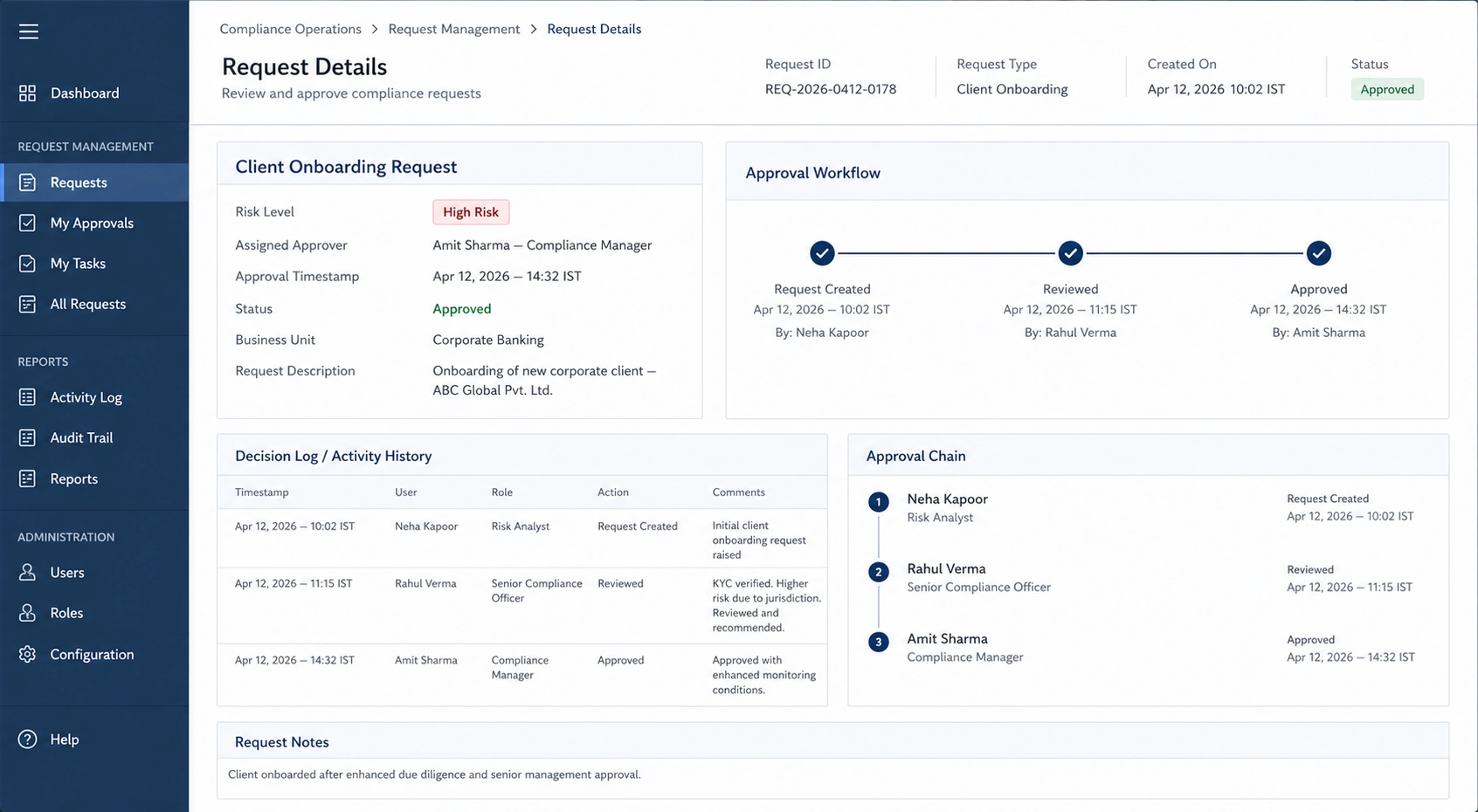
Approval systems are designed to evidence authorization. They assume that decisions originate within controlled workflows and are captured as part of that process.
Supervisors are increasingly testing that assumption.
Authorities operating under frameworks such as the Central Bank of the UAE AML regulations and supervisory expectations under the Saudi Central Bank (SAMA) are extending their reviews beyond system records. Instead of relying only on approvals recorded in platforms, they reconstruct decision timelines.
In practice, this means:
System timestamps are compared with operational events, such as onboarding or transaction execution
Sequences are examined to determine whether approval preceded action
Communication records may be requested where timelines appear inconsistent
In several UAE inspections, firms have been asked to explain why account activation occurred before recorded approval. In similar reviews under Saudi supervision, questions have focused on whether decision authority was exercised at the correct point in the process.
When timing does not align, the issue is not treated as an administrative delay. It is interpreted as a breakdown in control.
Informal communication is embedded in daily operations across most organizations. Messaging platforms, internal chats, and verbal discussions are often used to align decisions quickly.
In many cases, these discussions determine the outcome before formal approval is recorded.
While the system reflects an approval, the decision itself may have occurred outside the controlled environment.
From a supervisory standpoint, this creates immediate gaps:
The individual who authorized the decision at the point of action may not be clearly identifiable
It may not be evident whether the decision fell within delegated authority limits
Any required challenge or escalation may not have been documented
During UAE-based reviews, supervisors have raised concerns where senior instructions were issued through informal channels without evidence of formal authorization at that point. In Saudi Arabia, similar patterns have led to questions around whether governance frameworks are being applied consistently across business units.
Where accountability cannot be clearly demonstrated, the issue moves beyond process discipline.
It becomes a governance concern.
This issue rarely surfaces during internal reviews. It becomes visible under inspection.
A typical supervisory request may begin with a sample of onboarding or transaction approvals. Firms provide system logs, timestamps, and supporting documentation. On initial review, the records appear complete.
The pressure point emerges when supervisors align these records with actual activity.
An onboarding action may have been completed before the recorded approval. Internal communication may show that the decision was discussed and agreed upon earlier.
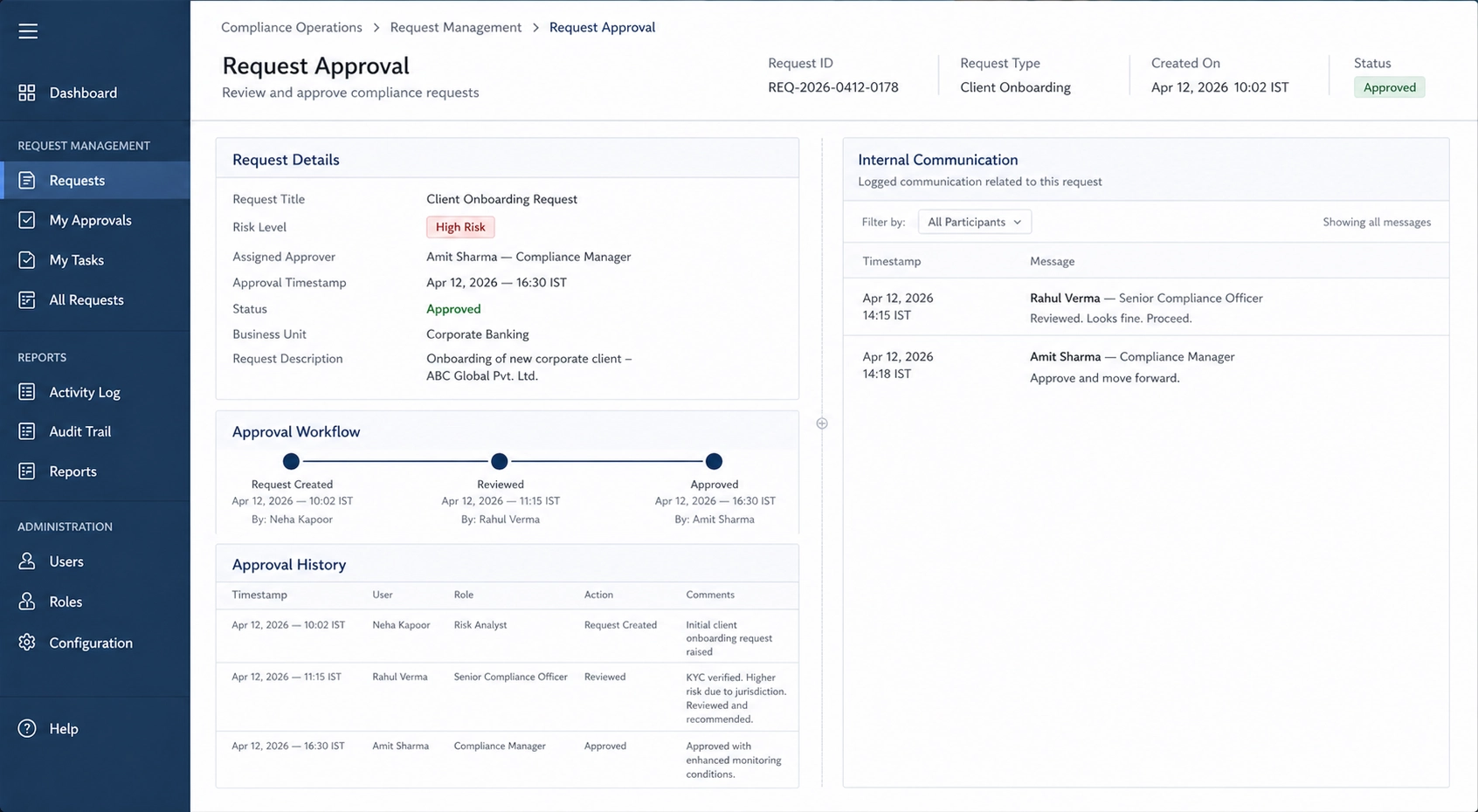
In one UAE inspection scenario, firms have been asked to reconcile approval timestamps with client activation data. Where discrepancies were identified, supervisors focused on whether approvals were functioning as control points or simply recording completed actions.
At this stage, the approval record no longer demonstrates control. It reflects documentation after the decision has already taken effect.
Once this pattern is identified, supervisory focus expands quickly.
The question is no longer limited to whether a specific approval was delayed. It becomes whether the approval framework is functioning as intended.
Where decisions are consistently initiated outside formal systems, regulators may interpret this as:
A breakdown in internal control effectiveness
Weaknesses in governance oversight
Misalignment between documented procedures and actual practices
Under UAE supervisory frameworks, such findings have led to broader reviews of control environments beyond the initial sample. In Saudi Arabia, similar observations have triggered deeper examination of management oversight and decision authority structures.
At this stage, the issue is no longer procedural.
It is treated as systemic.
Supervisory expectations across the GCC are evolving toward ensuring that governance operates at the point where decisions are made.
Organizations are expected to demonstrate that:
Decisions are initiated within controlled approval environments
Authorization occurs before execution
Approval records reflect the actual timing and context of decisions
Deviations from defined processes are identified and addressed
Where approval systems are used to record decisions after the fact, supervisors may view this as a disconnect between governance design and operational reality.
In many firms, decision-making spans multiple systems. Discussions may take place in communication tools, approvals are logged in internal platforms, and execution occurs elsewhere.
Individually, each system may function effectively. Together, they create fragmentation.
During supervisory reviews, this fragmentation makes it difficult to present a clear account of how a decision was made. Reconstructing a single approval may require pulling information from several sources, each with its own timeline.
In practice, UAE supervisors have challenged firms that were unable to produce a single consistent timeline of events across systems. In Saudi inspections, similar fragmentation has led to questions about whether approval processes are sufficiently controlled.
Where reconstruction becomes difficult, supervisors often question whether control exists at all.
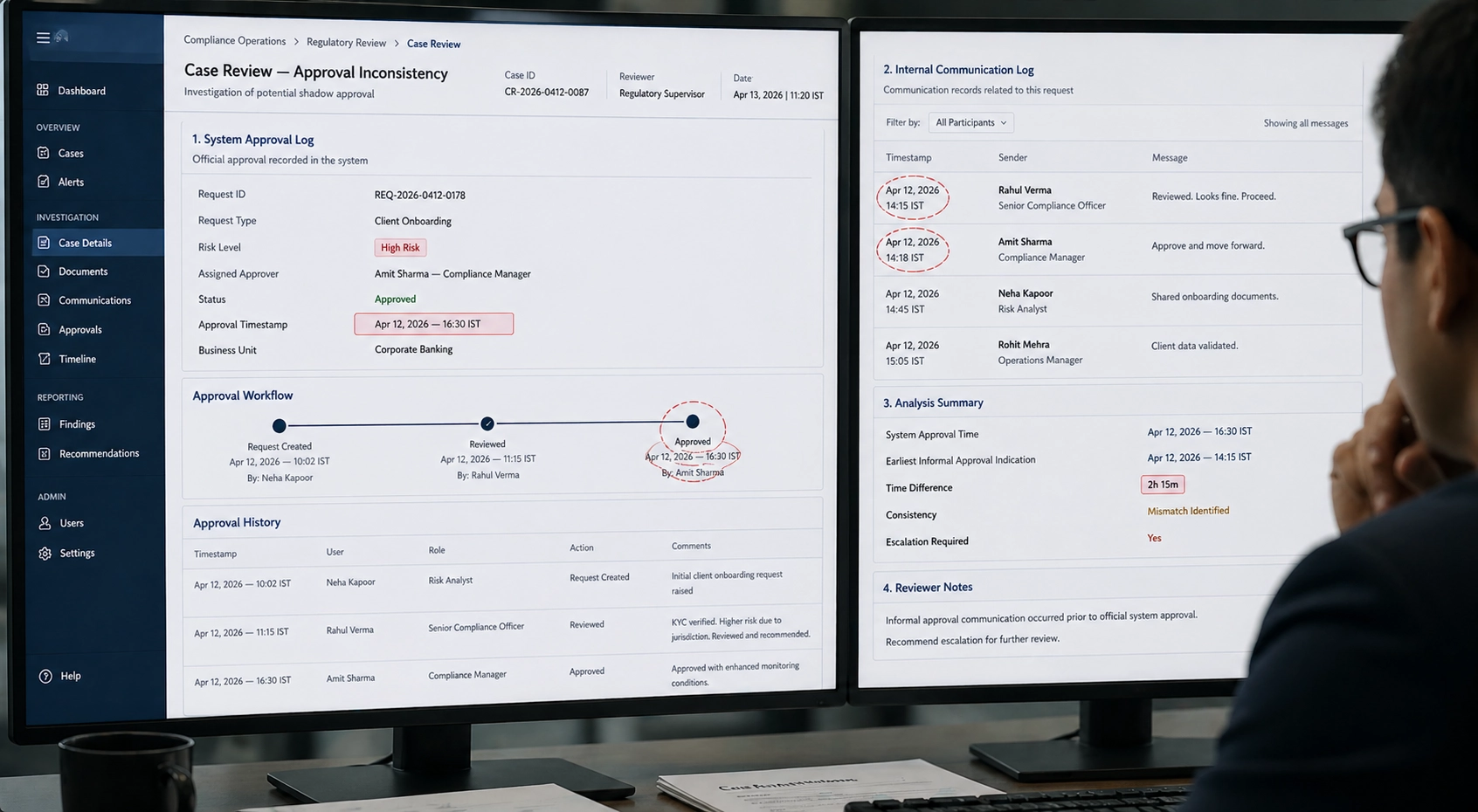
Organizations are increasingly expected to ensure that decisions do not exist outside the environments designed to govern them.
This is not a matter of tightening policy language. It is a matter of aligning operational behavior with control frameworks.
In practice, this means:
Decisions are captured within approval systems at the point they are made
Actions cannot proceed without prior authorization
Decision-making authority is exercised through defined and controlled channels
Approval records provide a clear and accurate representation of events
When these conditions are met, organizations are able to demonstrate that approvals are not only documented but also actively control outcomes.
Provide us with a bit of information about your business needs and we will be in touch to arrange a no commitment demonstration.


"*" indicates required fields