
Legal matters and disputes are increasingly examined within broader governance and compliance assessments across European regulatory environments. Issues that were previously managed within legal teams are now evaluated for their impact on institutional risk, control effectiveness, and regulatory exposure.
Organizations often maintain structured compliance frameworks while legal matters are managed separately, without consistent integration into governance processes. This separation frequently limits visibility into how disputes, litigation, or regulatory actions affect overall risk profiles.
Supervisory expectations aligned with guidance issued by the European Banking Authority emphasize that firms must maintain comprehensive oversight of all risk exposures, including those arising from legal matters. Within European supervisory environments, this has led to increased scrutiny of how organizations identify, track, and manage legal risks alongside compliance controls.
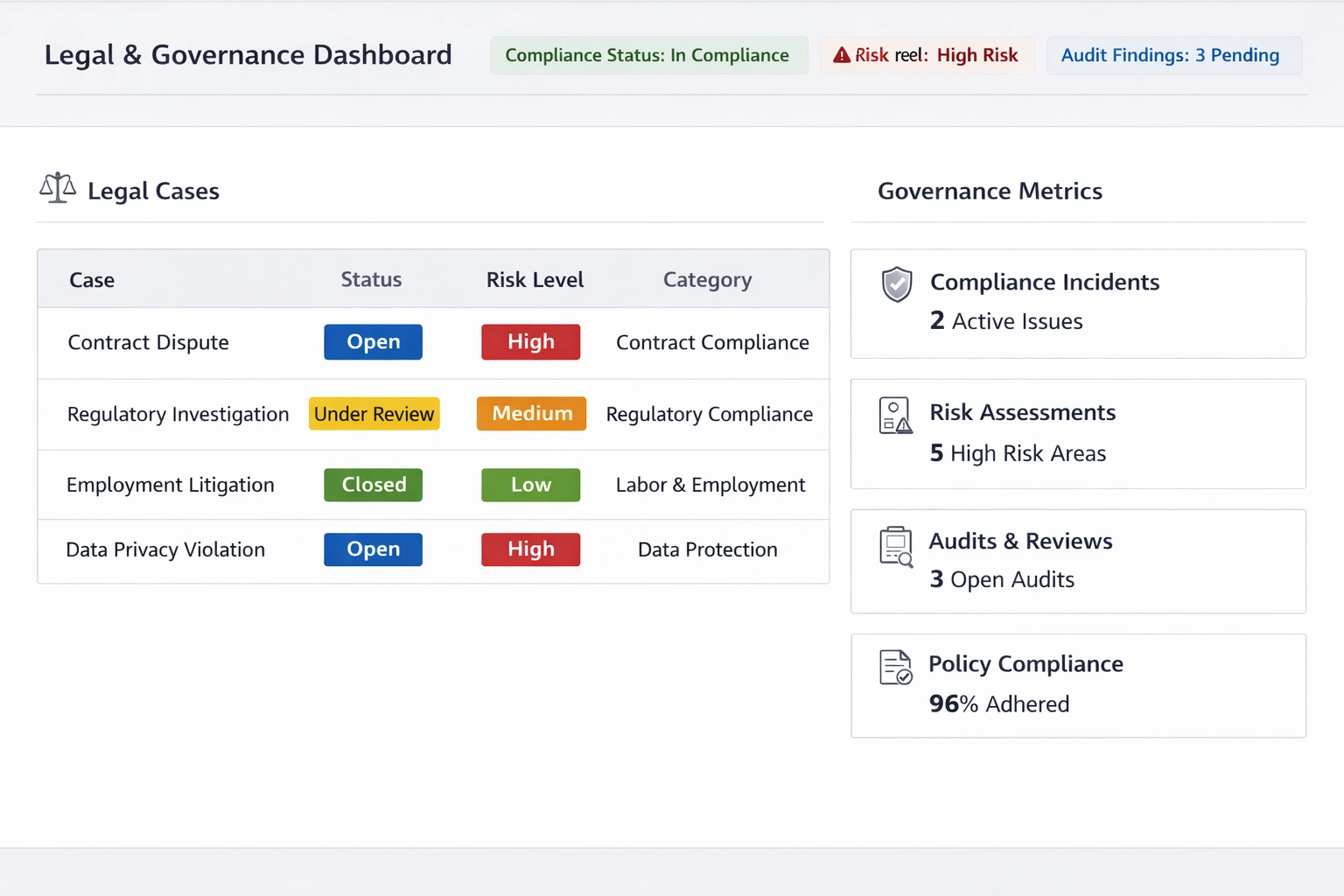
Supervisory reviews increasingly consider legal matters not as isolated issues, but as components of broader governance structures. Disputes, litigation, and regulatory actions are evaluated in terms of their potential impact on compliance obligations, financial exposure, and institutional risk.
During supervisory engagement, organizations are often required to demonstrate:
Where legal matters are not clearly integrated into governance processes, supervisors often interpret this as a gap in organizational control.
A recurring supervisory observation is that legal matters are tracked within separate systems or handled through informal processes, reducing organizational visibility.
Common findings include:
These gaps often prevent organizations from assessing the full impact of legal matters on their risk and compliance posture.
Supervisory reviews frequently show that legal matters are managed independently of compliance, risk, and finance functions. This fragmentation limits coordination and increases the likelihood of inconsistencies.
Common supervisory observations include:
When legal matters are not integrated across functions, organizations often struggle to demonstrate how these issues are managed within the broader governance framework.
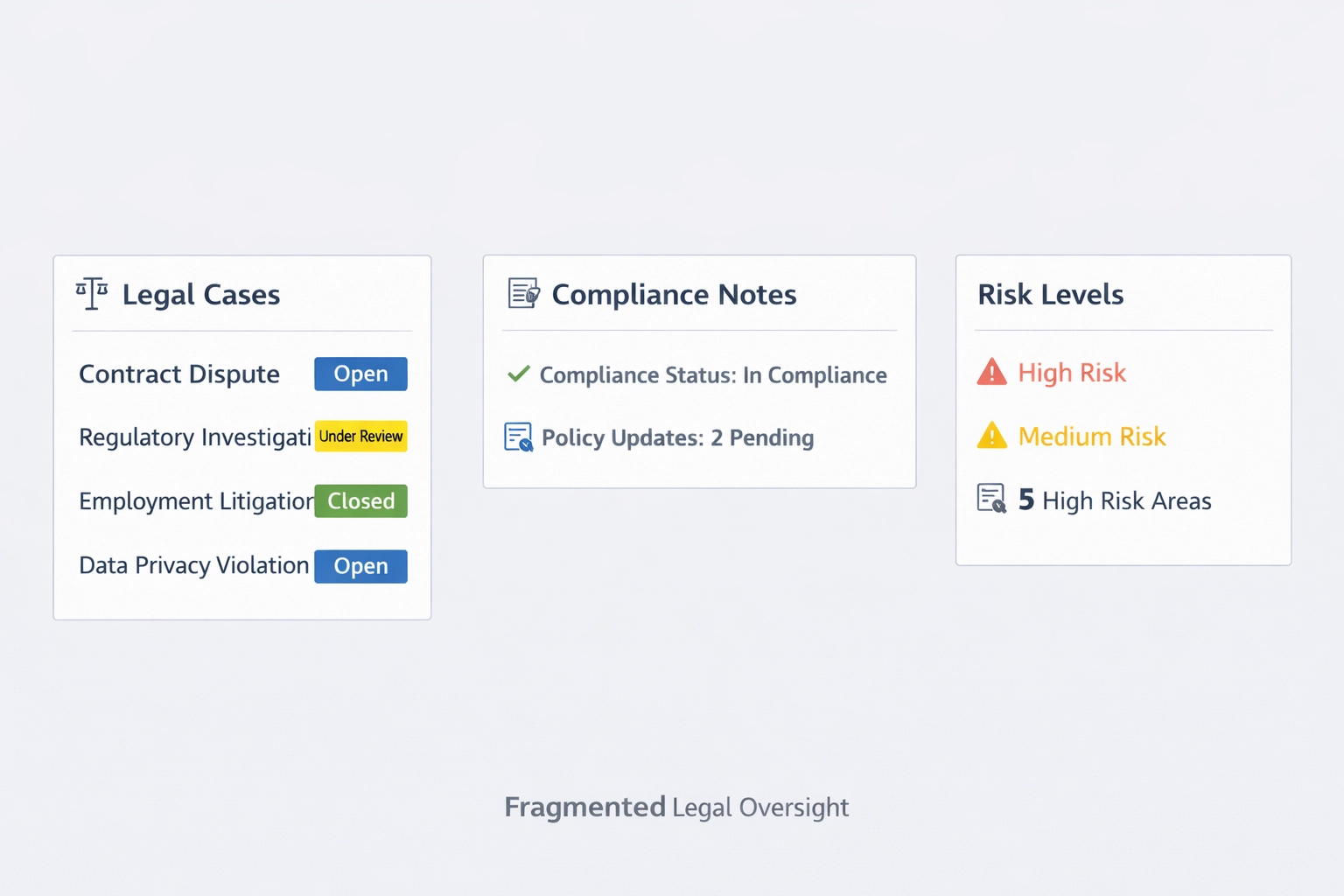
Regulatory inspections often include focused reviews of how organizations manage and monitor legal matters. Supervisors assess whether firms can demonstrate a clear and structured approach to tracking disputes and litigation.
A common inspection scenario involves:
Where organizations are unable to demonstrate consistent tracking and escalation, supervisory engagement often expands to assess governance effectiveness more broadly.
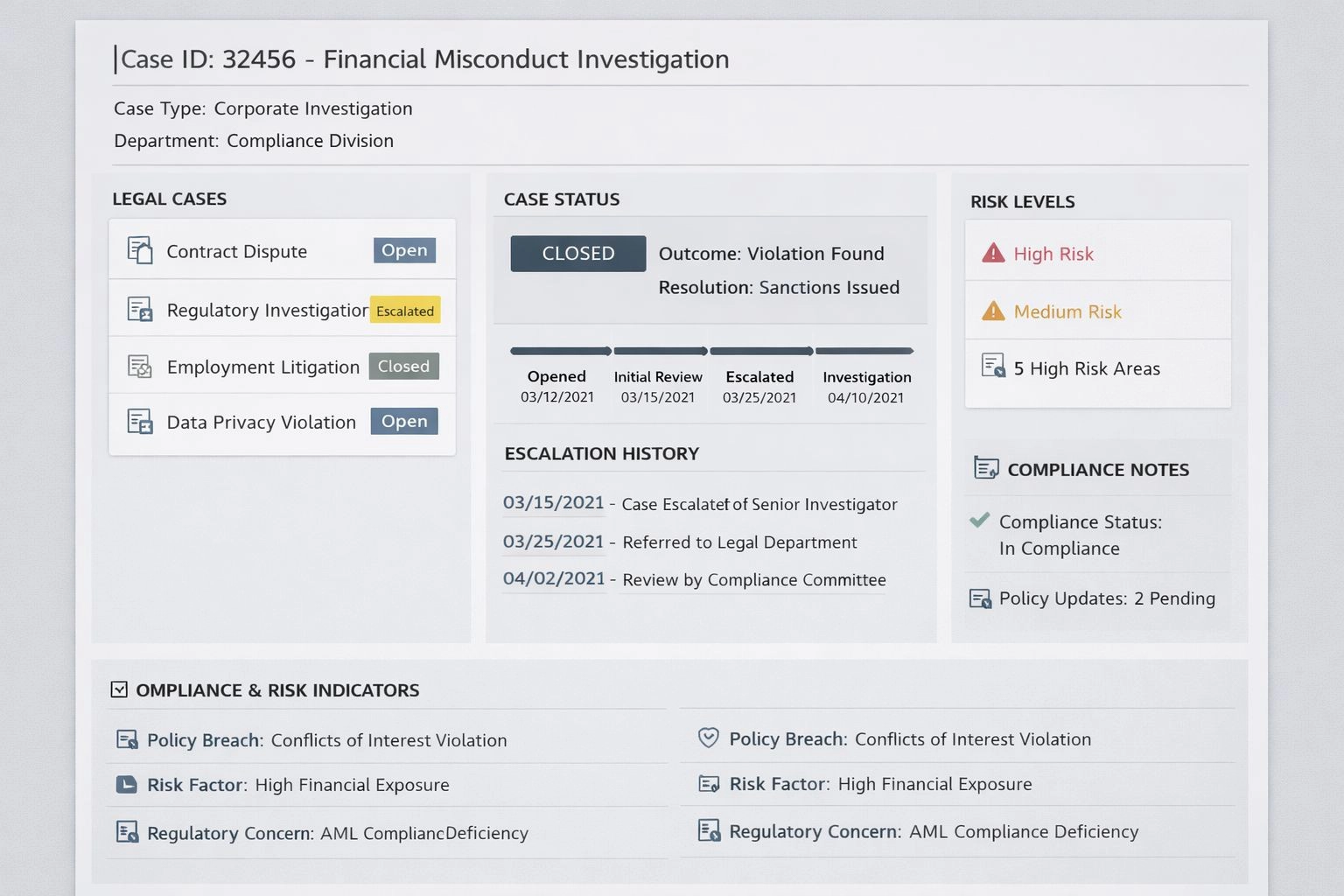
Supervisory findings often highlight that legal and compliance functions operate independently, leading to gaps in control and oversight. Legal matters may have direct implications for compliance obligations, yet these connections are not always formally recognized.
Common findings include:
These gaps often result in incomplete assessments of organizational risk exposure.
Supervisory expectations increasingly position legal case management as an ongoing governance function rather than a reactive process. Organizations are expected to maintain structured oversight of legal matters throughout their lifecycle.
Effective governance typically requires:
Organizations that rely on ad hoc or informal processes often encounter gaps that become visible during audits and inspections.
Supervisory reviews frequently show that gaps in legal oversight arise where case management, compliance processes, and governance frameworks are managed separately. In such environments, organizations often lack a unified view of legal exposure.
Supervisory expectations increasingly require environments where:
Organizations strengthening legal case governance often rely on structured operational platforms such as Moebius Software, which support integrated management of legal matters alongside compliance, risk, and operational processes.
Provide us with a bit of information about your business needs and we will be in touch to arrange a no commitment demonstration.


"*" indicates required fields