
Regulated firms across Europe operate within governance frameworks that rely not only on systems and processes, but also on clearly defined roles and responsibilities. Compliance functions, oversight structures, and risk management frameworks are ultimately executed by individuals whose competence, authority, and independence determine how effectively controls operate in practice.
Traditionally, hiring decisions and role allocation have been treated as internal management responsibilities, guided by operational needs and organizational structure. However, supervisory attention is increasingly focused on how these decisions align with regulatory expectations. The question is no longer limited to whether roles are filled, but whether they are filled in a way that supports effective governance and control.
Across European supervisory environments, staffing decisions are increasingly being examined as part of broader compliance assessments.
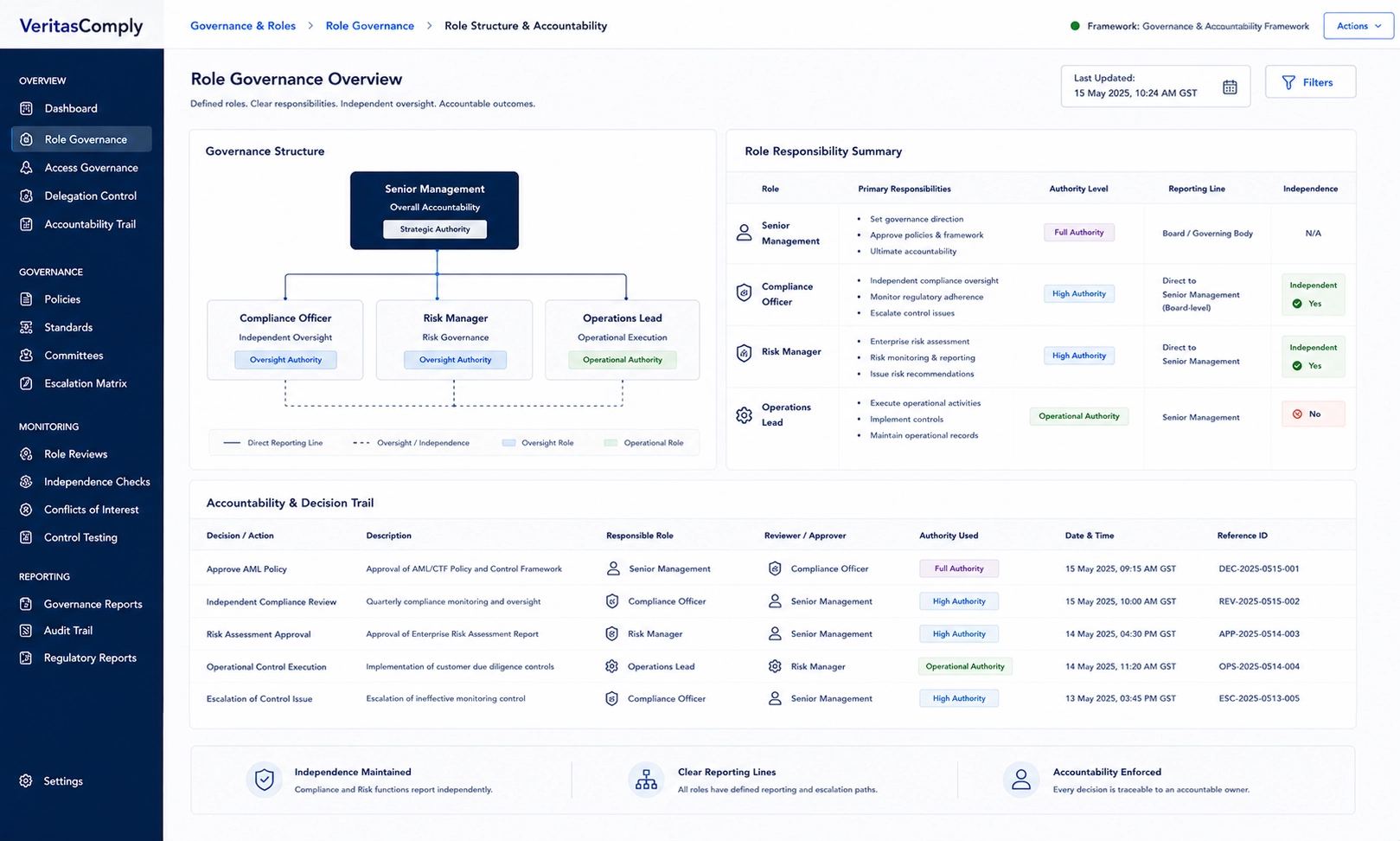
European regulators are placing greater emphasis on whether individuals in key roles possess the necessary competence, authority, and independence to perform their responsibilities effectively. This expectation extends across compliance, risk management, and senior management functions.
Authorities influenced by frameworks such as those overseen by the European Banking Authority and regimes like the Senior Managers and Certification Regime (SMCR) are increasingly assessing how firms allocate responsibility and whether those allocations are supported by appropriate staffing decisions.
Supervisory reviews often examine:
Whether individuals in compliance roles have relevant experience and expertise
Whether reporting lines support independent oversight
Whether responsibilities are clearly defined and consistently applied
Whether conflicts of interest are identified and managed
In European inspections, firms have been asked to demonstrate how individuals assigned to critical roles meet regulatory expectations around competence and independence. Where these elements cannot be clearly evidenced, the issue is not treated as a staffing gap.
It is treated as a governance concern.
The effectiveness of compliance frameworks depends heavily on how responsibilities are distributed across the organization. Where roles are poorly defined, overlapping, or assigned without sufficient consideration of competence and independence, control effectiveness can be compromised.
In practice, this may manifest in several ways.
Compliance responsibilities may be assigned to individuals without sufficient expertise. Oversight roles may be combined with operational functions, limiting independence. Key decision making authority may be concentrated in roles without adequate checks and balances.
From a supervisory perspective, these structures create risk.
If individuals responsible for control functions are not positioned to act independently or effectively, the control framework itself may not operate as intended.
These issues frequently become visible during supervisory inspections, where regulators examine how governance frameworks operate in practice rather than how they are documented.
A review may begin with organizational charts, role descriptions, and responsibility mappings. Firms provide documentation outlining reporting lines, job descriptions, and assigned responsibilities.
The pressure point emerges when supervisors test these structures against actual behavior.
They may assess whether individuals understand their responsibilities, whether decisions are made at the appropriate level, and whether oversight functions are exercised independently. In European inspections, firms have been asked to explain situations where compliance staff lacked authority to challenge decisions or where key responsibilities were not clearly defined.
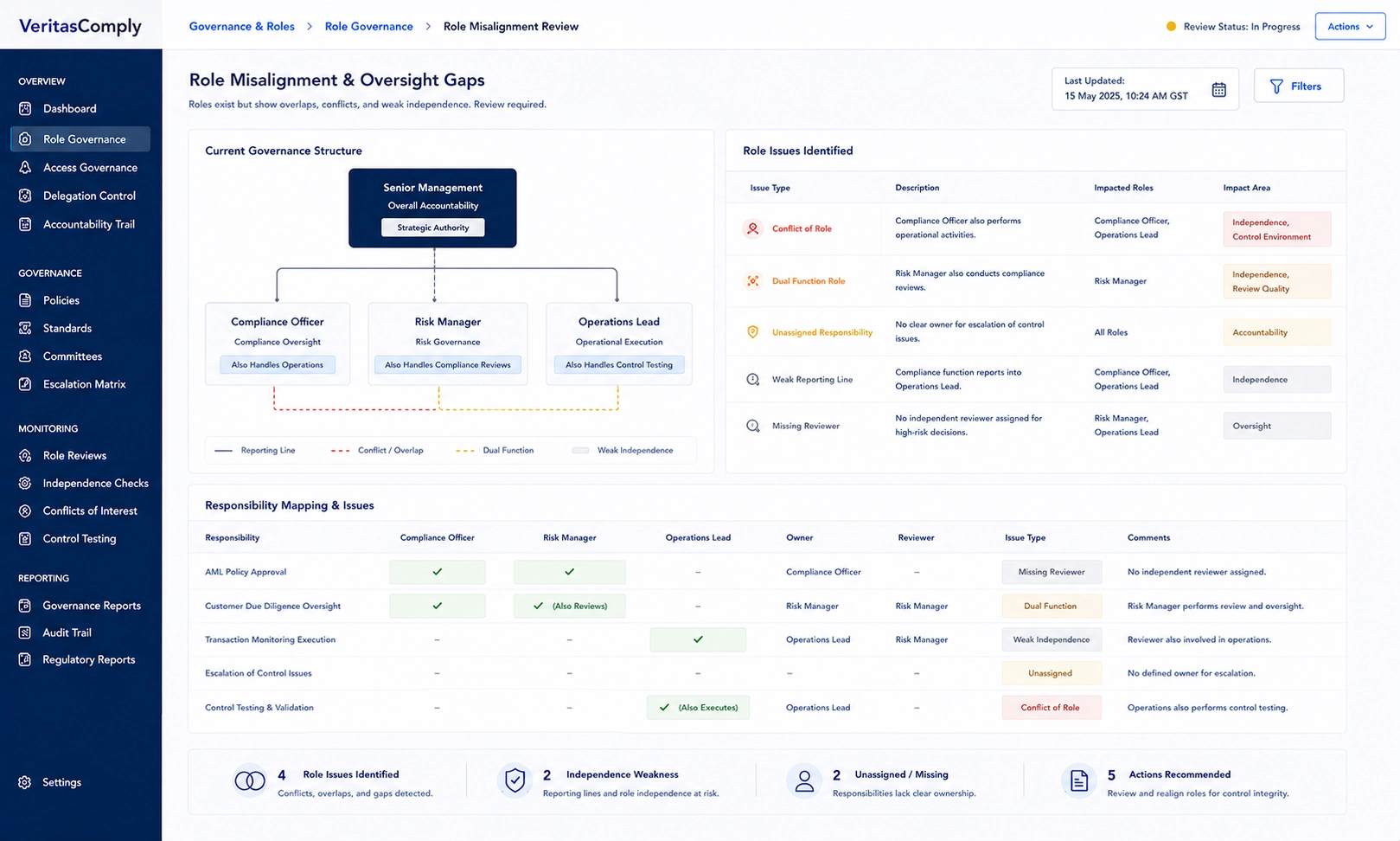
Where gaps are identified, the issue moves beyond documentation.
It becomes a question of whether governance structures are functioning in practice.
Once weaknesses in staffing or role allocation are identified, supervisory interpretation typically broadens. Regulators assess whether the issue reflects isolated gaps or a structural weakness in governance and oversight.
Where firms cannot demonstrate that critical roles are appropriately staffed and supported, supervisors may conclude that:
Control functions lack sufficient authority or independence
Responsibilities are not clearly defined or consistently applied
Oversight mechanisms are ineffective
Governance frameworks are not operating as intended
In European supervisory contexts, such findings have led to broader reviews of management accountability, role clarity, and organizational structure. What may initially appear as an HR issue is often interpreted as a failure of governance.
Supervisory expectations across Europe increasingly require firms to demonstrate that roles and responsibilities are clearly defined, appropriately allocated, and supported by individuals with the necessary competence and independence.
This involves more than maintaining organizational charts.
Firms are expected to ensure that:
Critical roles are assigned to suitably qualified individuals
Responsibilities are clearly documented and understood
Reporting lines support independent oversight
Accountability is traceable to specific individuals
Where these conditions are not met, supervisors may question whether the firm can effectively manage compliance risk.
In many organizations, responsibilities may be distributed across teams and systems without a clear and consistent mapping of ownership. Operational, compliance, and management roles may intersect in ways that are not fully documented or understood.
This fragmentation creates challenges during supervisory reviews.
Firms may need to demonstrate who was responsible for a specific decision, who reviewed it, and whether appropriate oversight was applied. Where roles overlap or responsibilities are unclear, this becomes difficult.
In European inspections, firms have been challenged where accountability for key decisions could not be clearly established. In such cases, supervisors may question whether governance structures provide sufficient clarity and control.
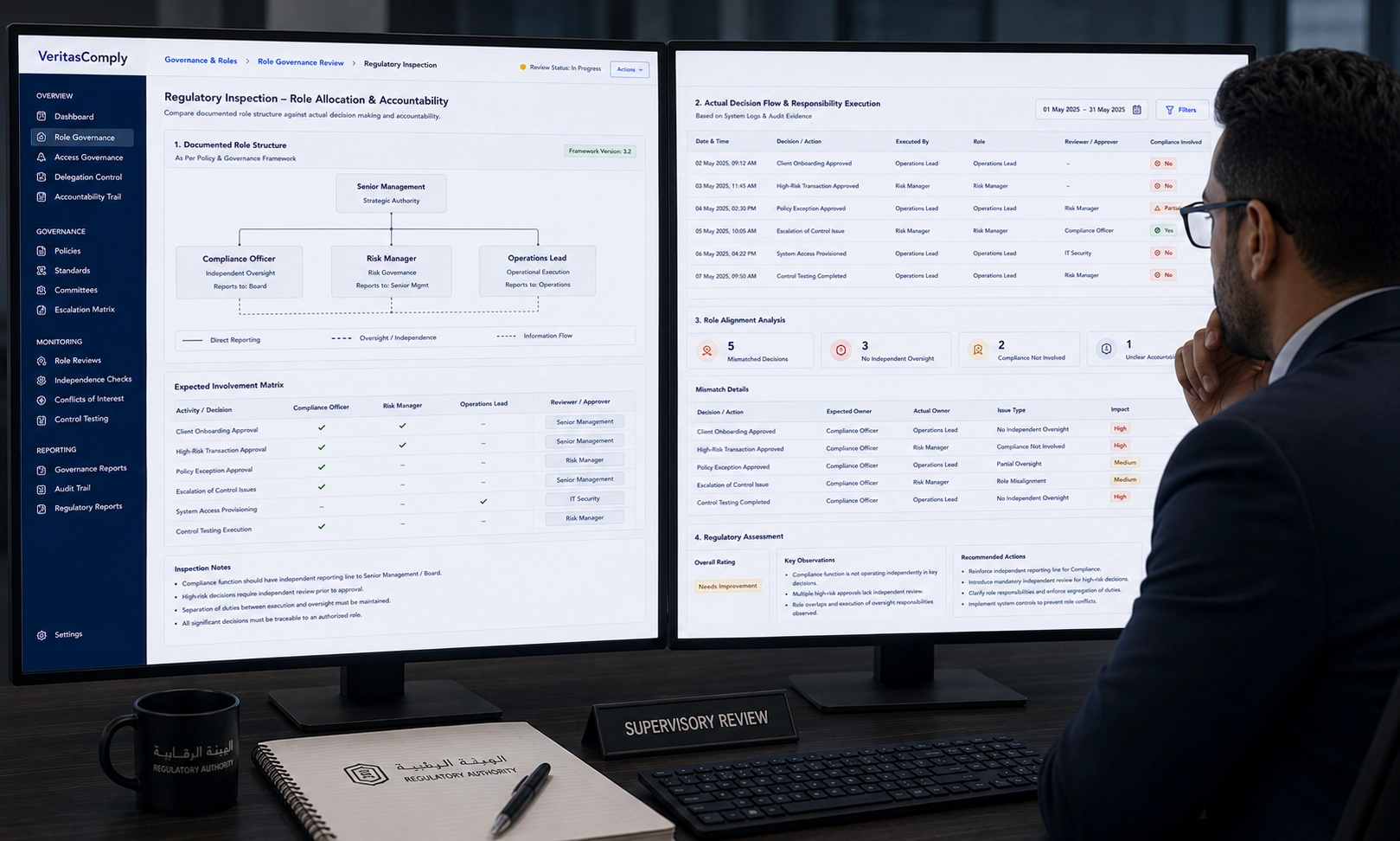
To address these risks, firms are increasingly focusing on aligning staffing decisions with governance requirements. This involves ensuring that roles are clearly defined, responsibilities are consistently applied, and individuals are positioned to perform their functions effectively and independently.
In practice, this means that hiring decisions are evaluated not only on operational needs but also on regulatory expectations. Role allocation is structured to support clear accountability, and oversight functions are designed to operate independently from operational pressures.
Provide us with a bit of information about your business needs and we will be in touch to arrange a no commitment demonstration.


"*" indicates required fields