
Supervisory reviews across European jurisdictions increasingly assess how organizations maintain consistency between compliance, risk, and finance data. Rather than evaluating these functions in isolation, regulators examine whether information used across departments aligns when subjected to a detailed review.
In several cases, firms are able to demonstrate strong controls within individual functions but are unable to reconcile differences when data is compared across compliance, risk, and finance. These inconsistencies are frequently interpreted as indicators of governance weaknesses rather than isolated technical issues.
Supervisory expectations aligned with frameworks issued by the European Banking Authority emphasize the importance of coherent and reliable data across governance functions. Within European regulatory environments, this has led to increased focus on how organizations structure, reconcile, and validate data across internal systems.
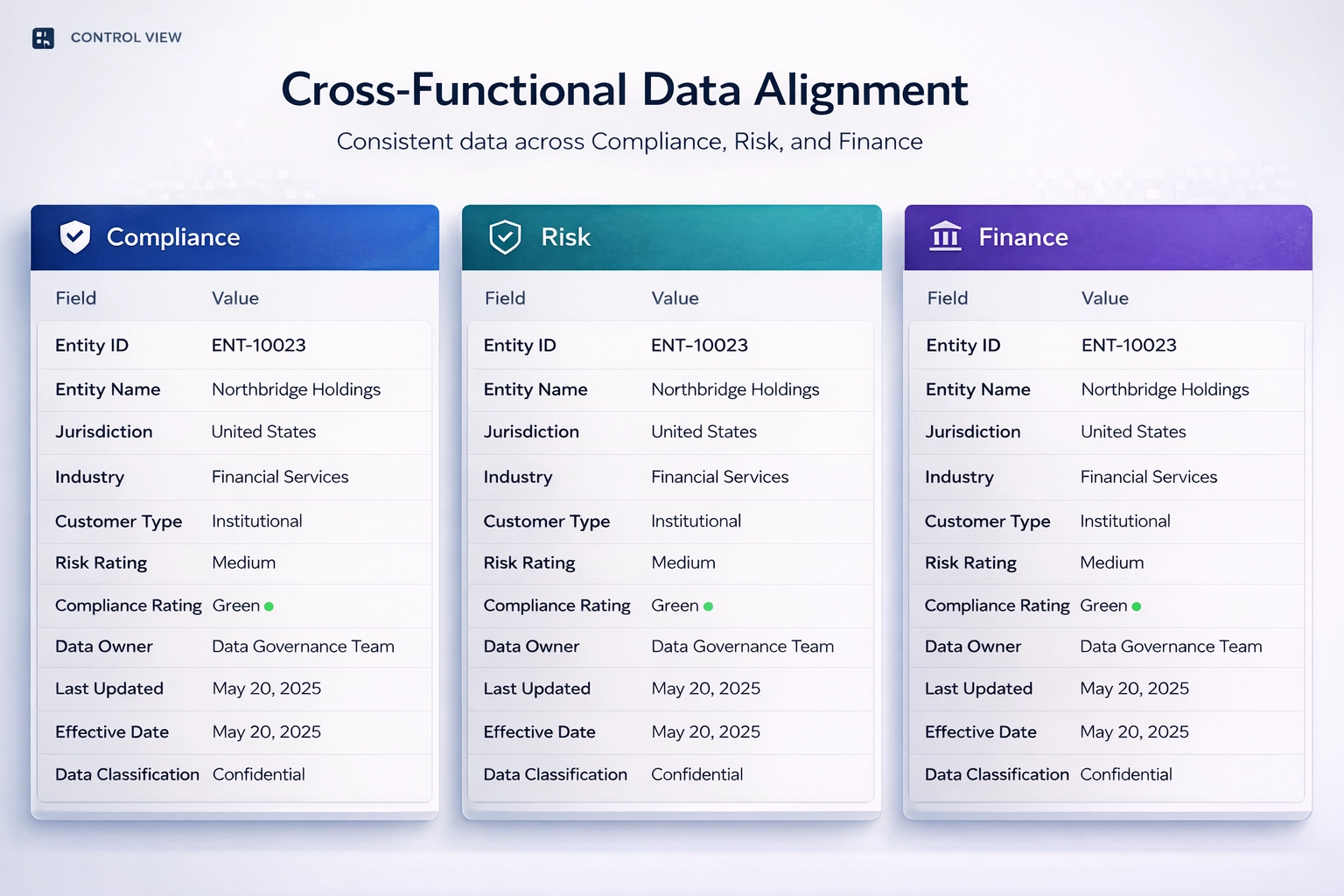
Regulatory reviews are no longer limited to assessing data accuracy within individual functions. Supervisors increasingly compare datasets across compliance, risk, and finance to evaluate whether information is consistent and aligned.
During supervisory engagement, organizations are often required to demonstrate:
Where discrepancies arise between these datasets, supervisors frequently interpret them as signals that internal controls are not operating cohesively across the organization.
A recurring supervisory observation is that inconsistencies between datasets are rarely viewed as isolated data errors. Instead, regulators interpret them as indicators of deeper governance breakdowns.
Supervisory findings commonly highlight:
These observations often lead to broader scrutiny of governance frameworks, particularly where inconsistencies cannot be explained or resolved consistently.
Supervisory reviews frequently show that data used across compliance, risk, and finance functions is maintained in separate systems with limited integration. This fragmentation makes it difficult to ensure that information remains consistent across functions.
Common supervisory observations include:
When supervisors compare datasets across functions, these inconsistencies often become visible, particularly during detailed inspections.
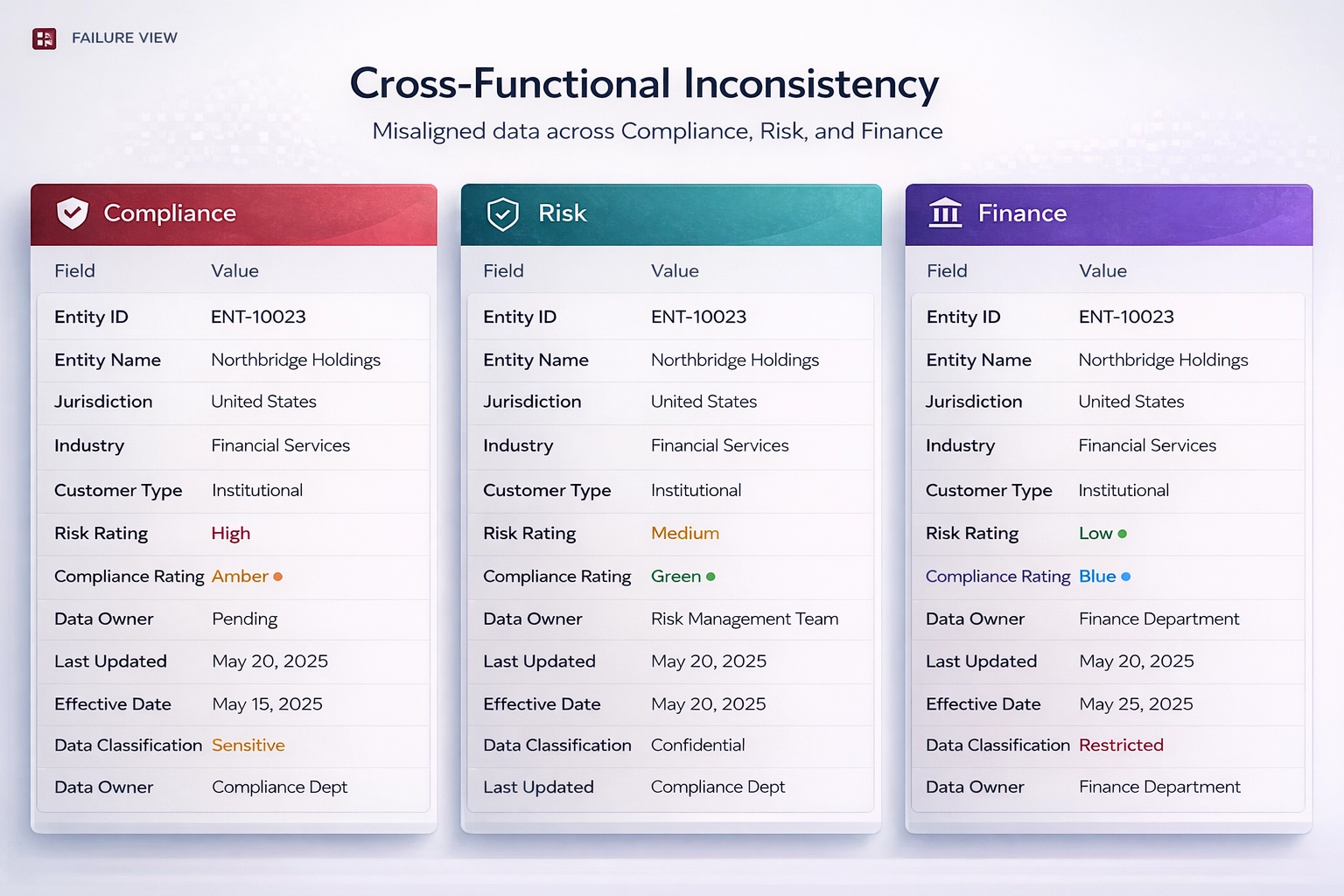
Regulatory inspections increasingly include exercises where supervisors request organizations to reconcile data across compliance, risk, and finance functions. These exercises are designed to test whether data remains consistent when examined from different perspectives.
A common inspection scenario involves:
Where organizations are unable to reconcile differences clearly, supervisory engagement often escalates. Repeated inconsistencies are frequently interpreted as indicators that governance frameworks are not effectively aligned across functions.
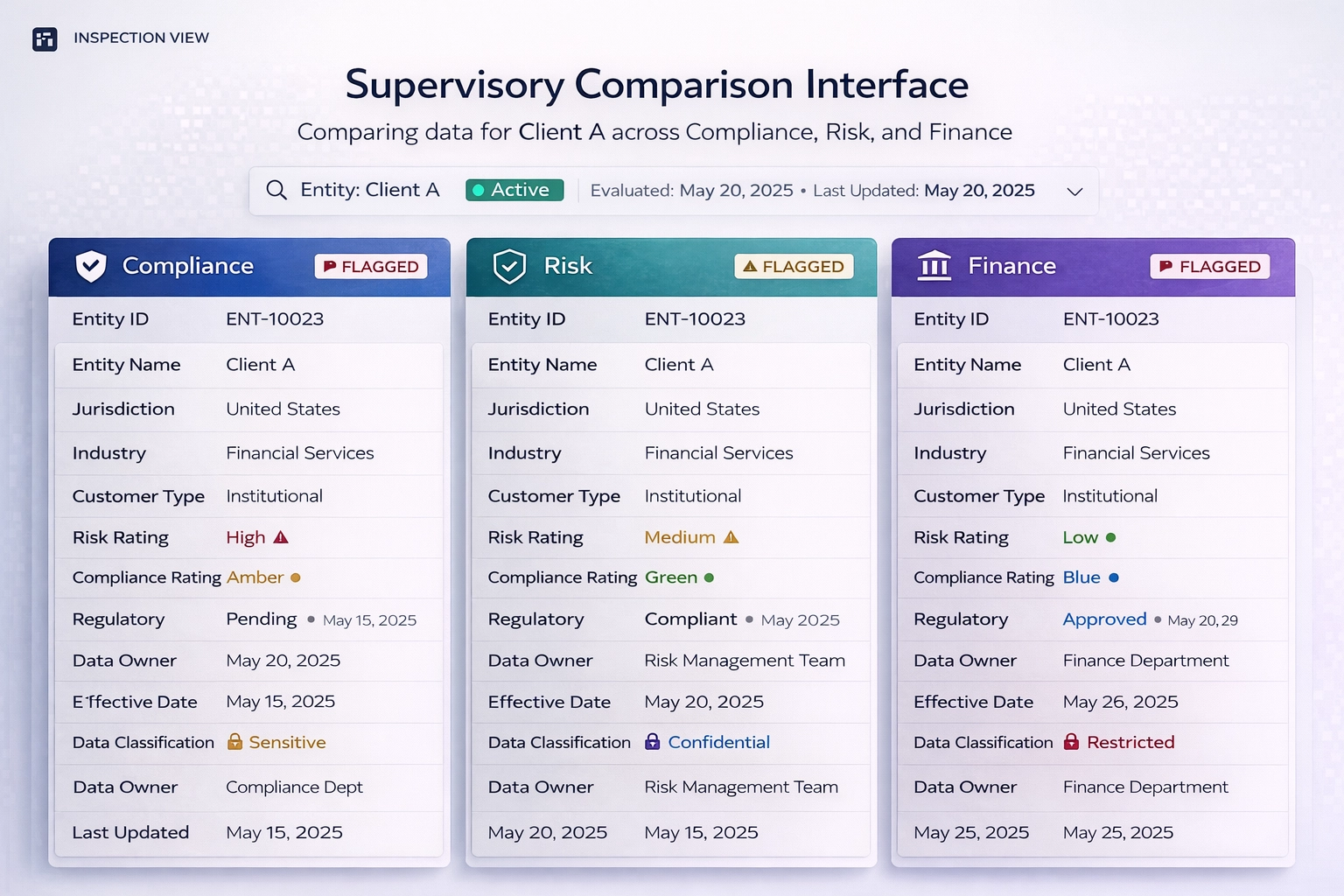
Supervisory observations often highlight that inconsistencies arise not only from system fragmentation, but also from unclear ownership of data across functions. Where responsibilities are divided between compliance, risk, and finance teams, maintaining consistent data becomes more complex.
Common findings include:
Where ownership is not clearly defined, inconsistencies are more likely to persist and become visible during supervisory review.
Supervisory expectations increasingly position data consistency as a continuous control rather than a periodic reconciliation activity. Organizations are expected to maintain alignment across compliance, risk, and finance data on an ongoing basis.
Effective governance typically requires:
Organizations that rely on periodic reconciliation often encounter discrepancies that accumulate over time and become visible during supervisory inspection.
Supervisory reviews frequently show that cross-functional inconsistencies arise where data is managed across disconnected systems without unified governance structures. In such environments, organizations often rely on manual reconciliation to align data across functions.
Supervisory expectations increasingly require environments where:
Organizations addressing cross-functional data consistency challenges often rely on structured operational platforms such as Moebius Software, which support unified data governance and alignment across compliance, risk, and finance functions.
Provide us with a bit of information about your business needs and we will be in touch to arrange a no commitment demonstration.


"*" indicates required fields