
Fiduciaries, trustees and corporate service providers across the GCC are operating in a market that is becoming more sophisticated by the year. Clients are establishing increasingly complex structures, operating across multiple jurisdictions and expecting professional service providers to coordinate a growing network of companies, trusts, foundations, advisers and service relationships.
In the UAE, this evolution is particularly visible in jurisdictions such as ADGM, where the ecosystem supports structures including SPVs and foundations. ADGM’s Company Service Provider framework requires non-exempt SPVs and foundations to appoint an ADGM-licensed CSP, with providers responsible for services including incorporation, registered-office provision and ongoing filings.
For fiduciaries, trustees and CSPs, the opportunity is significant. But so is the operational challenge: how do you take on more structures, more clients and more responsibilities without allowing the administrative workload to grow at the same pace?
The answer is increasingly moving beyond hiring more people. It is about changing how the service itself is organised.
The traditional fiduciary model was largely relationship-driven. A provider might manage a portfolio of companies for a client, coordinate statutory requirements, maintain corporate records, communicate with advisers and ensure that important activities were completed on time.
As structures become more sophisticated, however, the service increasingly resembles a professional operating model.
A single client relationship can involve multiple legal entities, directors, shareholders, beneficial owners, trustees, beneficiaries, advisers, bank accounts, corporate documents and recurring activities. A provider may also be coordinating with lawyers, accountants, banks, investment managers and other professional advisers across different jurisdictions.
The complexity is therefore not necessarily in any one task. It is in the number of relationships that must remain connected as the client structure evolves.
This is particularly relevant in ADGM, where the CSP framework requires licensed providers to maintain adequate financial, human and technical resources, systems and controls. The regulator’s 2026 assessment also recorded a substantial increase in legal persons and arrangements operating in the jurisdiction, highlighting the growing scale and complexity of the ecosystem.
For service providers, that means the operating model behind the client service matters almost as much as the service itself.
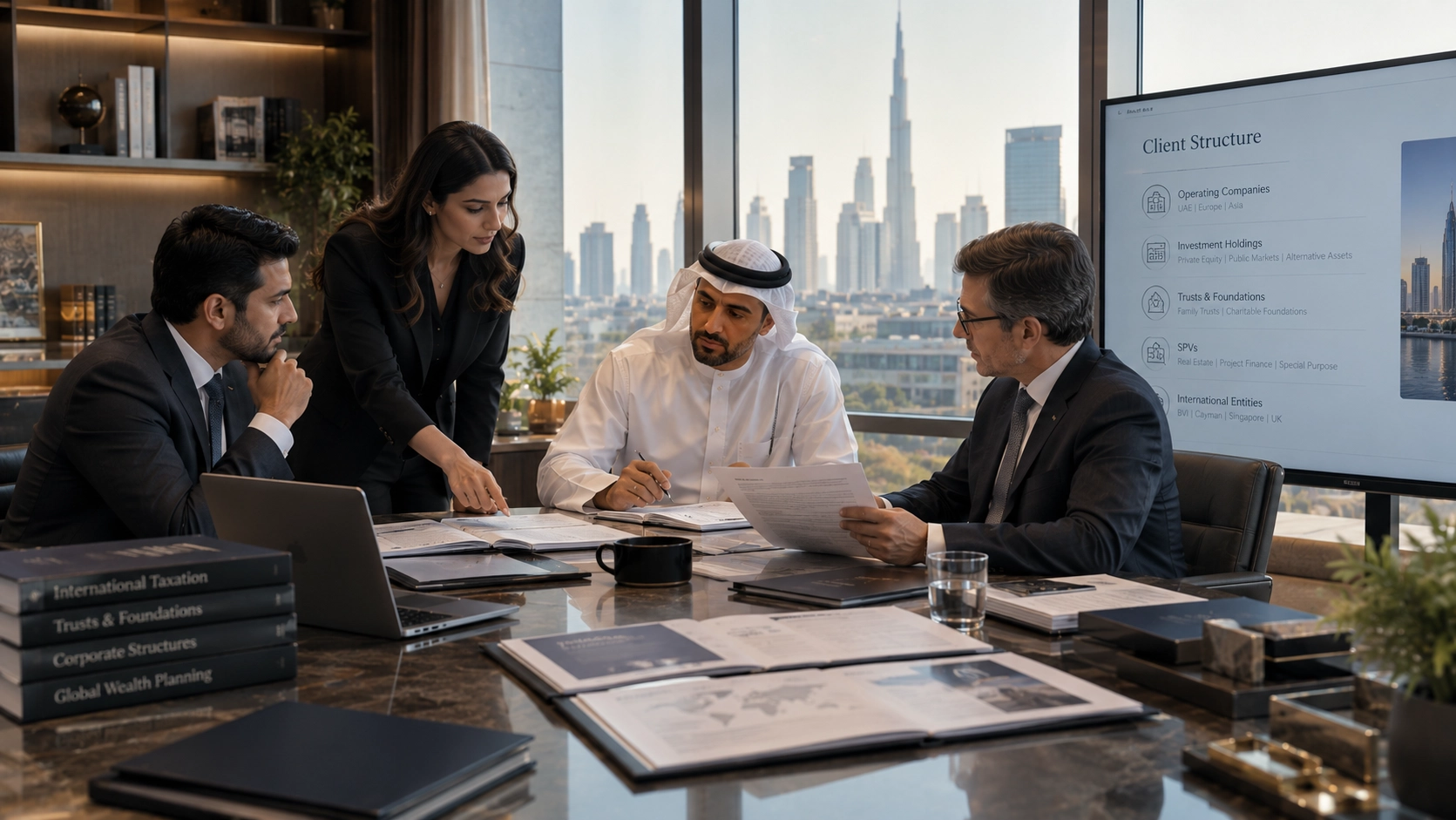
A fiduciary business does not necessarily become difficult to operate simply because it has more clients. The difficulty emerges when every additional client creates another layer of entities, relationships, documents and activities that must be managed manually.
Consider a CSP managing 100 client structures.
Each structure may have its own companies, directors, shareholders, beneficial owners, registered addresses, bank relationships, corporate documents and recurring activities. Some clients may have straightforward structures; others may involve several jurisdictions, trusts, foundations or holding companies.
At a smaller scale, experienced employees can often compensate for this complexity through personal knowledge and established working habits. At scale, that approach becomes increasingly difficult to sustain.
The result is what could be called a service complexity tax: every new client generates not only additional revenue, but also additional coordination, administration, and dependence on people knowing where information sits and what needs to happen next.
The commercial question is therefore not simply, How many clients can we serve?
It is how many client relationships can we serve effectively without increasing operational friction at the same rate?
Fiduciary services are inherently expertise-led. Clients rely on professionals who understand their structures, their history, and the responsibilities associated with managing them.
That expertise is valuable. But when too much operational knowledge exists only in the minds of individual employees, expertise can become a bottleneck to growth.
An experienced administrator may know why a particular structure was established, which adviser normally handles a particular matter, which documents are relevant to a specific entity, and which recurring activities require attention. Another member of the team may know a completely different part of the client relationship.
This works until the organisation needs to transfer responsibilities, onboard new employees, cover absences or expand into a larger client portfolio.
The objective should not be to replace professional judgement with software. It should be to make the operational context surrounding that judgement easier to access, maintain and transfer.
That distinction matters. Technology should strengthen the expertise of a fiduciary team rather than attempt to automate the relationship itself.
Many providers already use software for individual activities. Corporate records may be maintained digitally, documents may be stored electronically, and contacts may be managed through a CRM.
The next step is connecting those functions around the actual client service.
Imagine a client structure containing several companies and a foundation. The provider should be able to move naturally from the structure itself to the relevant directors and beneficial owners, then to the associated documents, advisers, activities and service projects.
The value is not simply that each piece of information exists digitally. It is that the information retains its business context.
A corporate structure should connect to the people responsible for it. Those people should connect to the relevant documents and activities. Those activities should connect to the service team responsible for completing them.
That creates a very different operating environment from one where employees have to reconstruct the client relationship every time they begin a task.

This is where the fiduciary model starts to resemble other professional services businesses.
A client relationship increasingly consists of a collection of projects, activities and responsibilities that need to be planned, assigned, completed and reviewed. Some are recurring. Others are triggered by changes in the client structure or a specific event.
A technology platform therefore needs to support more than entity administration. It needs to help the provider understand what work is being performed, for whom, by whom, when, and with which supporting information.
That is the role of a structured professional-services layer.
For a fiduciary team, this might mean managing a client onboarding project, coordinating an entity restructuring, tracking a sequence of corporate activities, managing adviser participation, recording deadlines, associating documents, and monitoring the financial side of the engagement from the same operational environment.
The objective is not to turn fiduciary work into a production line. It is to give professionals a clearer operating framework around the work they are already performing.
There is no single technology architecture that will suit every fiduciary or CSP. A specialist provider serving a focused group of structures will have different requirements from a multi-jurisdictional provider managing hundreds of entities.
The underlying principles, however, are relatively consistent.
Corporate structures need to be connected to entities, ownership, officers, beneficial owners, and related corporate information.
Client relationships need to connect families, companies, trustees, directors, advisers, banks and other stakeholders to the structures they are associated with.
Documents need to remain connected to the entities and activities they support rather than becoming isolated repositories.
Professional services activities need to connect people, projects, deadlines, documents, expenses and billing information.
Most importantly, these functions should work together. The goal is not to create one enormous system for the sake of having one system. It is to remove unnecessary boundaries between functions that are already dependent on one another.
This is where the economics of technology become particularly important for fiduciary businesses.
If every increase in client volume requires a proportional increase in administrative staff, the provider eventually reaches a capacity ceiling. Margins can become harder to protect, experienced staff become overloaded, and management attention shifts towards operational coordination rather than client development.
A more connected operating environment changes that equation.
When information is structured and reusable, teams spend less time reconstructing client relationships. When activities and responsibilities are organised centrally, fewer tasks depend on individual memory. When documents, projects and contacts are connected, employees can work from context rather than repeatedly searching across systems.
The objective is not simply to make employees work faster.
It is to increase the amount of high-quality client service that each professional can support without introducing equivalent administrative overhead.
That is a much more strategic definition of efficiency.
For fiduciaries and corporate service providers, Moebius Professional Services Management provides the operational layer for managing complex client work.
It allows teams to bring project information, participants, advisers, activities, deadlines, documents, billing and financial details into a structured environment. Projects can be organised by client or business group, with designated administrators and participants, while access controls can be applied to sensitive projects and their documents.
That becomes particularly valuable when professional services are being delivered across a large number of entities and client relationships.
The professional-services layer can also work alongside Moebius Corporate Management, which supports companies, trusts, branches, partnerships and foundations, including ownership, officers, beneficial owners, corporate registers and banking information.
Document Management and Contact Management extend that operating environment by connecting supporting documentation and stakeholder information to the wider client relationship.
The result is not simply another collection of software modules. It is a more connected environment for delivering fiduciary and corporate services as the organisation grows.
There is an important distinction between scaling fiduciary services and industrialising them.
Clients still expect judgement, discretion and relationships. Trustees and corporate service providers will continue to rely on experienced professionals to understand structures, interpret situations and make appropriate decisions.
Technology should therefore sit underneath the relationship, not between the professional and the client.
Its role is to make the professional better equipped: giving them the right information, the relevant history, the supporting documents, and a clear view of ongoing work without requiring them to reconstruct the client relationship from multiple sources.
That is ultimately what scalable fiduciary technology should deliver — more capacity without less attention.
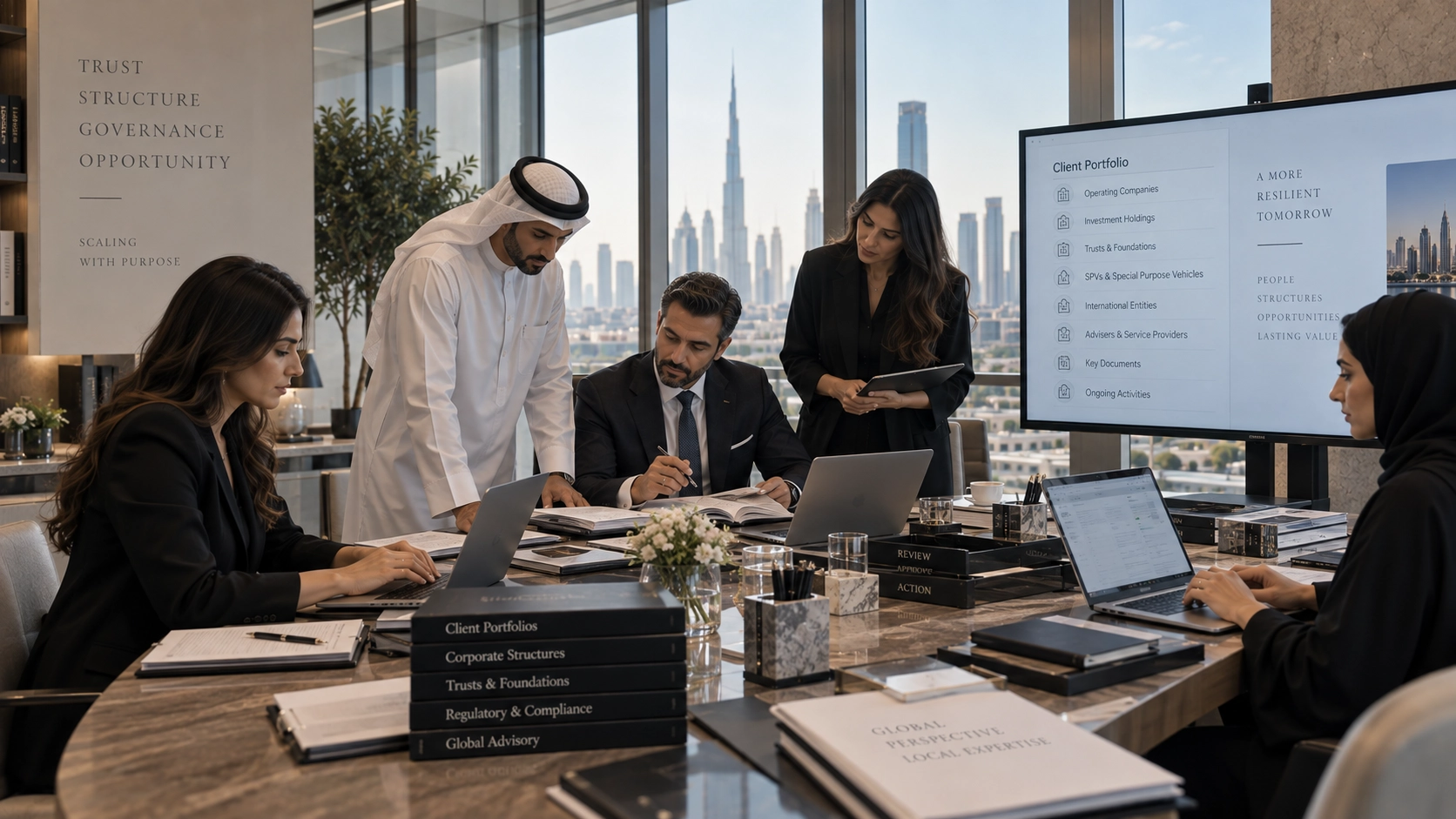
The next generation of fiduciary and corporate service providers will not necessarily differentiate themselves simply by managing more structures.
They will differentiate themselves by how effectively they can manage complexity while maintaining the quality of the client experience.
As GCC markets continue to develop sophisticated structures involving companies, SPVs, trusts, foundations and international assets, the operational demands placed on fiduciaries will continue to evolve. ADGM’s framework already reflects the importance of properly resourced CSPs, including adequate financial, human and technical resources, systems and controls.
The strategic question for providers is therefore becoming clearer: can your operating model scale at the same speed as your client base?
For fiduciaries, trustees and CSPs, the answer may increasingly depend on whether technology can connect the structure, the relationship and the work being performed around it.
Provide us with a bit of information about your business needs and we will be in touch to arrange a no commitment demonstration.


"*" indicates required fields