
Regulatory reporting within GCC jurisdictions has evolved from a submission requirement into a core control function subject to direct supervisory scrutiny. Regulators are no longer focused solely on whether reports are submitted on time, but on whether the underlying data can be validated, traced, and defended during supervisory review.
In several cases, firms can submit reports on time but are unable to explain how key figures were derived when challenged during supervisory review.
Supervisory expectations aligned with frameworks issued by the Financial Action Task Force (FATF) emphasize that reported information must reflect verifiable compliance activity supported by reliable data and governance processes. Within GCC environments, this has translated into increased focus on how reporting data is generated, controlled, and evidenced.
Supervisory engagement now routinely tests whether organizations can demonstrate not just reporting outputs, but the full chain of data, validation, and approval that supports those outputs.
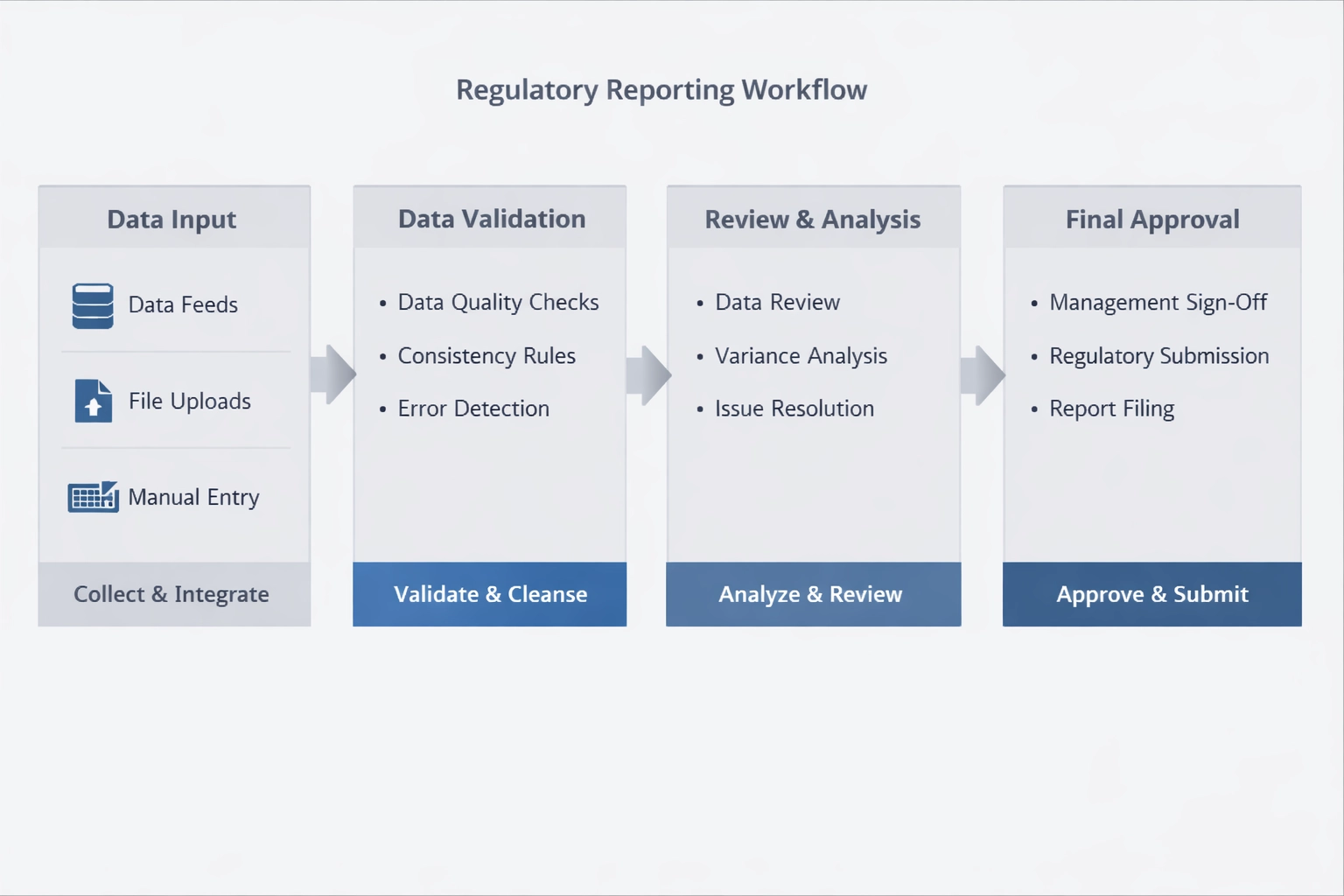
Regulators across the GCC increasingly examine how reported figures are produced rather than treating reporting as a standalone output. During supervisory reviews, firms are expected to demonstrate how each reported value has been derived from underlying operational data.
Supervisors frequently request detailed explanations of:
Where organizations cannot clearly explain how reported values are constructed, supervisory concerns typically extend beyond reporting into broader questions about data governance and control effectiveness.
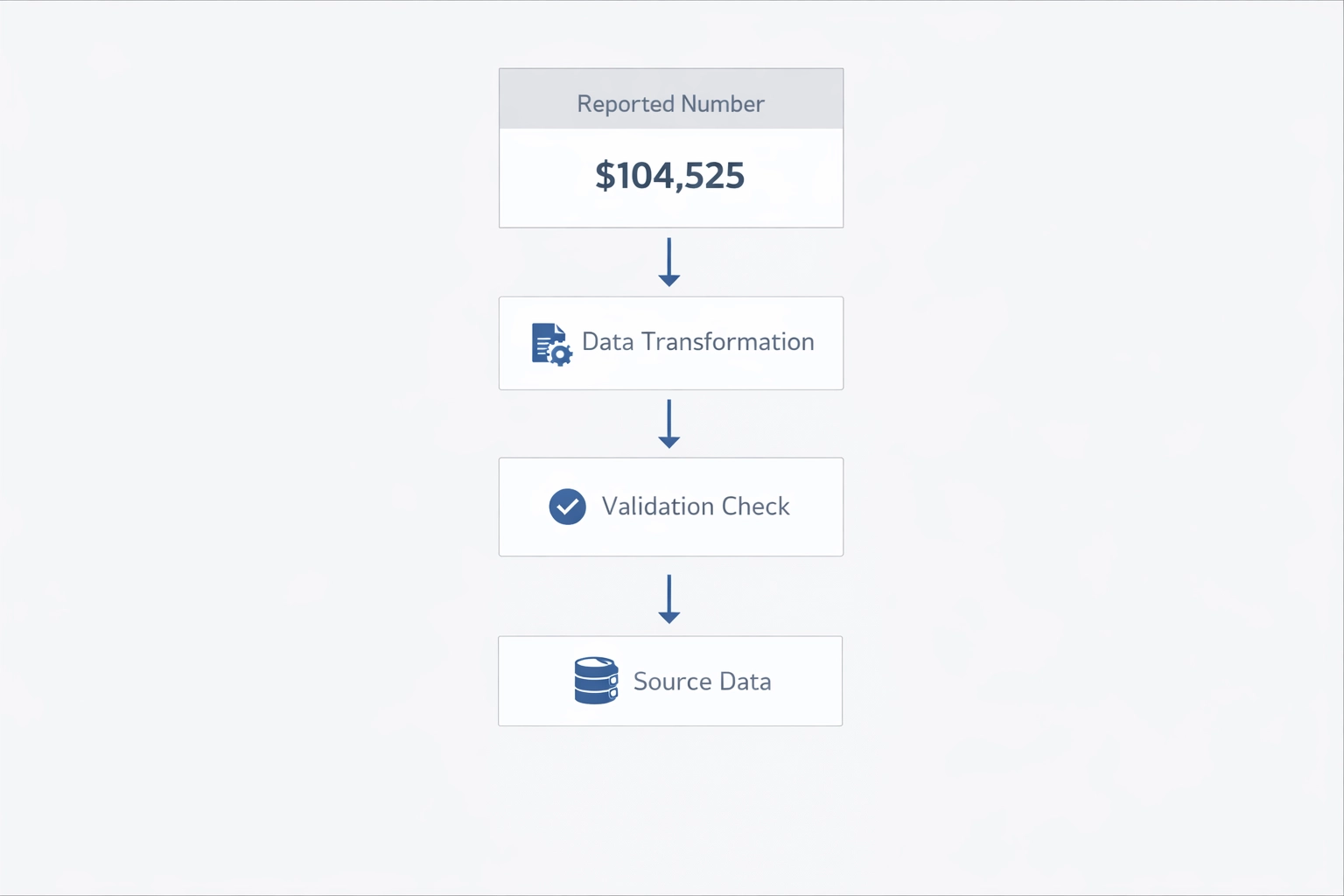
A recurring theme in supervisory reviews is the expectation that firms can demonstrate full data lineage. This involves tracing reported figures back to their source, including all intermediate transformations and validations.
During inspections, supervisors may isolate a single reported value and request a step-by-step reconstruction of how that value was generated. This often includes:
Supervisory findings frequently arise where firms are unable to provide a complete and consistent data lineage, particularly when manual adjustments or undocumented transformations are involved.
Supervisory reviews consistently show that fragmented operational environments are a primary cause of reporting weaknesses. In many cases, data used for regulatory reporting is sourced from multiple disconnected systems, requiring manual consolidation before submission.
This fragmentation often results in:
When supervisors request a reconstruction of reported data, organizations frequently encounter challenges in aligning information across systems, particularly where data transformations are not centrally recorded.
Supervisory expectations increasingly treat validation and approval processes as fundamental components of reporting governance. Regulators assess whether organizations apply structured and repeatable controls before reports are finalized.
Common supervisory findings include:
Authorities such as the Central Bank of the UAE (CBUAE) emphasize that robust internal controls must support reporting. Where validation and approval processes are inconsistent or undocumented, supervisors often interpret this as a governance failure rather than a procedural gap.
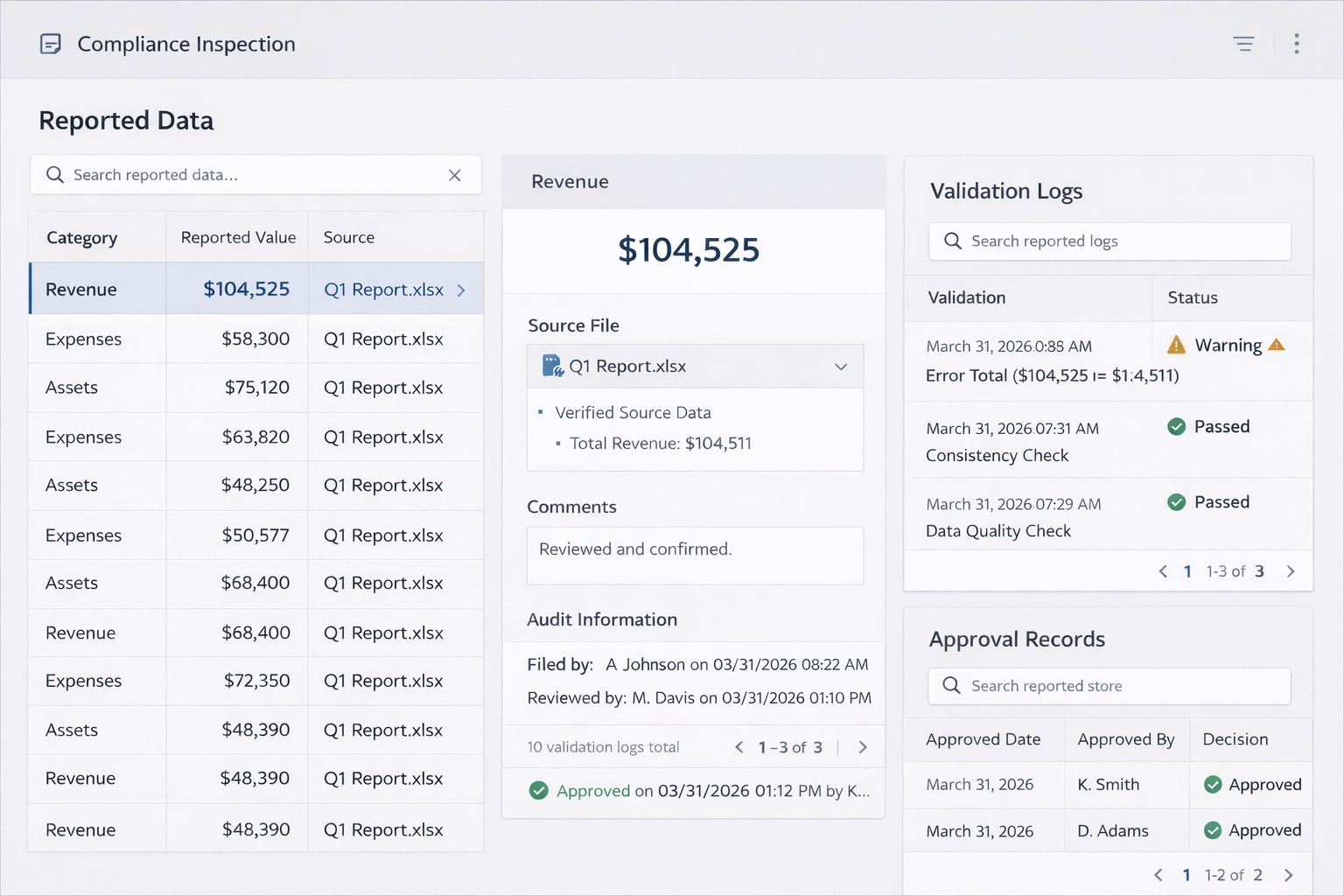
Regulatory inspections frequently involve testing whether organizations can defend reported data under detailed questioning. Supervisors may select specific figures and require firms to demonstrate how those values were derived, validated, and approved.
A common inspection scenario involves:
Where organizations are unable to provide clear and consistent explanations, supervisory engagement often escalates. Repeated inconsistencies or inability to reproduce reported figures may lead to extended reviews focused on reporting governance and internal controls.
Supervisory focus on reporting accuracy extends beyond operational teams to senior management. Regulators increasingly assess whether management understands how reporting data is produced and whether appropriate governance is applied to reporting processes.
Supervisory observations often highlight:
Where senior management cannot demonstrate understanding or involvement, regulators may interpret this as a broader governance weakness rather than an isolated reporting issue.
Supervisory expectations increasingly position regulatory reporting as an ongoing control function rather than a periodic activity. This requires organizations to maintain consistent processes for data validation, reconciliation, and approval across reporting cycles.
Effective reporting governance typically involves:
Organizations that treat reporting as a periodic exercise often encounter inconsistencies that surface during supervisory review.
Supervisory reviews frequently show that organizations cannot demonstrate reporting accuracy where data flows, validation steps, and approvals are not centrally recorded. When reporting processes rely on fragmented systems, maintaining consistent evidence becomes difficult, particularly under supervisory scrutiny.
Supervisory expectations increasingly require environments where:
Organizations addressing reporting accuracy challenges often rely on structured operational platforms such as Moebius Software, which support traceable data flows, controlled validation processes, and defensible reporting outputs.
Provide us with a bit of information about your business needs and we will be in touch to arrange a no commitment demonstration.


"*" indicates required fields