
Across Europe, professional firms are operating under an expanding web of regulatory obligations that rarely exist in isolation. Anti-money laundering (AML) requirements, data protection rules, licensing conditions, operational resilience expectations, and professional conduct standards increasingly overlap in both scope and execution.
For many firms, the challenge is no longer understanding what regulations apply. It is managing how those obligations interact operationally, especially when compliance responsibilities are spread across disconnected systems, teams, and workflows.
This tension is becoming a defining factor in audit and inspection outcomes in 2026.
In jurisdictions such as Cyprus, where professional firms are subject to supervision by bodies including the Cyprus Securities and Exchange Commission (CySEC) and other professional regulators, inspections increasingly examine how firms manage overlapping regulatory duties in practice, not just how those duties are described on paper.

Regulatory frameworks across Europe have expanded significantly over the past decade. Professional firms may simultaneously fall within the scope of:
Individually, each framework is manageable. Operational risk emerges when these obligations intersect.
For example, client onboarding processes must satisfy AML due diligence requirements while also complying with GDPR data minimization and accountability rules. Licensing conditions often require firms to demonstrate internal controls that rely on the same data used for transaction monitoring, client risk classification, and record retention.
When these obligations are managed across separate tools and processes, firms create multiple versions of the same compliance reality.
Many professional firms continue to manage regulatory obligations through a patchwork of systems:
During day-to-day operations, these structures often appear workable. Teams adapt, reconcile manually, and resolve inconsistencies as they arise.
During audits and inspections, those same structures become liabilities.
Auditors and regulators increasingly test whether data supporting one obligation aligns with evidence required under another. When systems are fragmented, firms struggle to demonstrate consistency across frameworks, even when each obligation has technically been addressed.
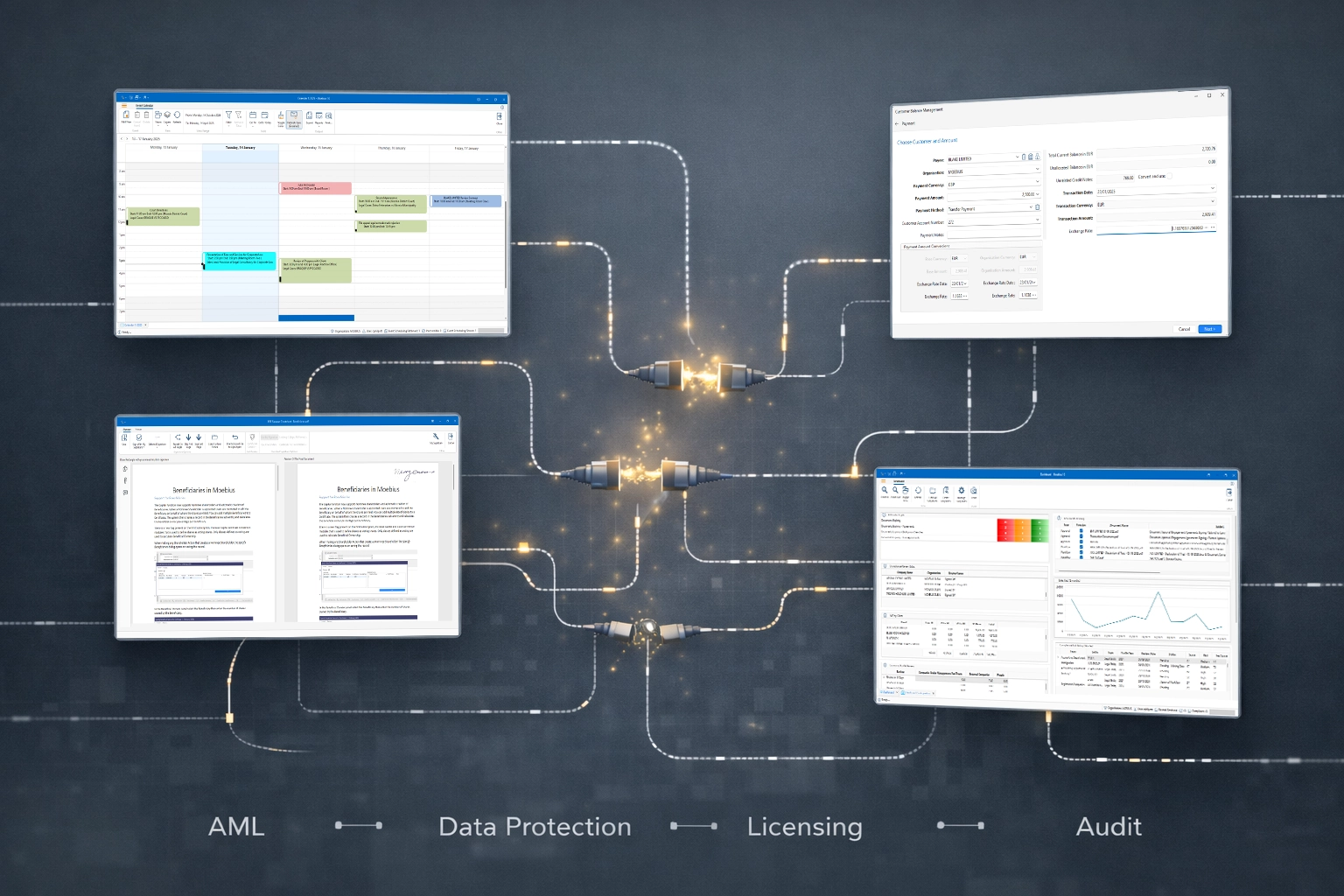
In 2026, the audit and inspection focus has shifted decisively toward operational coherence.
Regulators and auditors are no longer satisfied with confirmations that policies exist or reports have been filed. They assess whether firms can demonstrate, in real time:
In Cyprus-regulated environments, this approach is increasingly visible during thematic inspections and licensing reviews, where firms are asked to reconcile obligations across multiple supervisory expectations within compressed timelines.
When regulatory duties are managed independently, governance gaps often remain hidden until inspections occur.
Common weaknesses include:
These issues are rarely interpreted as technical errors. Regulators increasingly view them as indicators that compliance is not structurally embedded into operations.
In multi-framework environments, governance quality is inferred from how seamlessly obligations align, not how well they are documented individually.
Cyprus provides a useful lens through which to view these challenges, not because it is unique, but because its regulatory environment reflects broader European trends.
Professional firms operating in Cyprus must navigate EU-level obligations alongside national supervisory expectations. During inspections, authorities frequently assess whether firms can demonstrate consistent compliance across AML, data protection, licensing, and professional conduct requirements.
Firms that rely on disconnected systems often struggle to present a coherent narrative. Firms with integrated compliance environments are able to respond with confidence, even when obligations overlap.
The lesson is not jurisdiction-specific. It applies across European regulatory markets.

Firms that remain audit-ready under overlapping regulatory obligations tend to share a common operational approach rather than a checklist of controls.
Compliance data is managed through a centralized view that supports multiple regulatory frameworks at once, allowing decisions to be documented in a single, defensible record. Internal controls are embedded directly into day-to-day workflows, ensuring they operate consistently rather than as parallel processes.
As a result, audits and inspections are treated as routine validation exercises instead of disruptive events. This operating model reduces duplication, limits reconciliation risk, and strengthens defensibility when regulators assess how different obligations interact.
As regulatory overlap increases, manual coordination between systems becomes unsustainable.
Unified compliance platforms help firms align overlapping obligations by:
The objective is not automation for its own sake. It is operational coherence.
Firms that invest in unified compliance environments are better positioned to demonstrate governance maturity when obligations intersect.
Overlapping regulatory obligations are not a temporary challenge. They reflect the direction of regulatory evolution across Europe.
Professional firms that continue to manage compliance in silos will face increasing audit friction, longer inspections, and heightened supervisory scrutiny. Firms that align obligations operationally will find audits more predictable and less disruptive.
Audit readiness in 2026 is no longer about preparing for inspections. It is about designing operations that withstand them continuously.
Provide us with a bit of information about your business needs and we will be in touch to arrange a no commitment demonstration.


"*" indicates required fields