
Document management is increasingly examined during audits and supervisory inspections across GCC jurisdictions. While documentation has traditionally been treated as a supporting function, regulators now assess how records are created, stored, versioned, and retrieved as part of broader governance evaluation.
In several cases, organizations are able to produce documents when requested, but cannot demonstrate whether those documents are complete, current, or aligned with the underlying operational activity when challenged during inspection.
Supervisory expectations aligned with guidance issued by the Financial Action Task Force (FATF) emphasize that firms must maintain reliable records supporting compliance activity. Within GCC environments, this has translated into closer scrutiny of how documentation is managed across the organization.
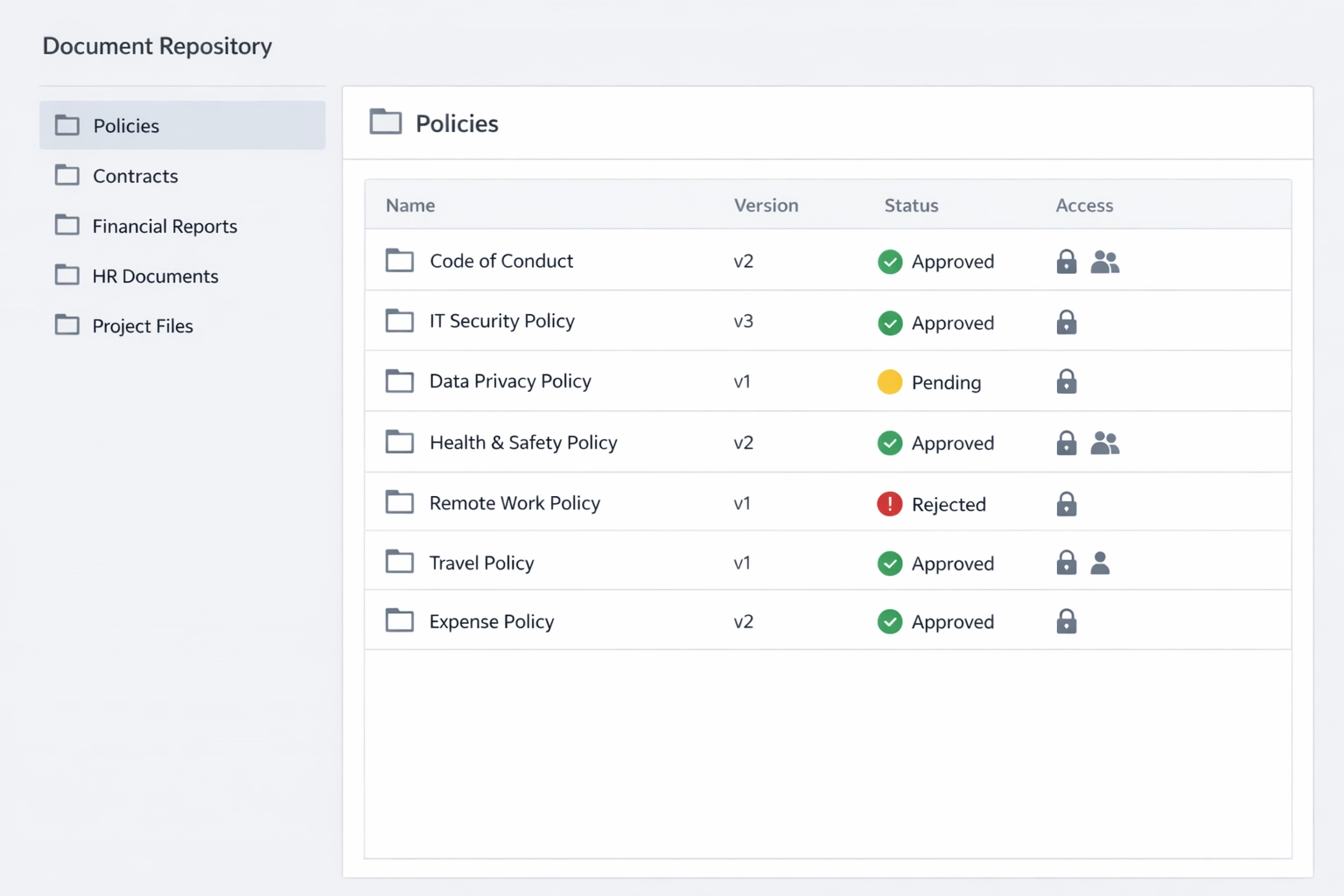
A consistent observation during audits is that the presence of documentation is no longer sufficient. Supervisors increasingly test whether documents are accurate, current, and directly linked to the operational processes they are intended to support.
Supervisors increasingly distinguish between documents that exist and documents that function as evidence of an activity, requiring clear linkage between records and the actions they are intended to support.
During inspections, organizations are frequently asked to demonstrate:
Where these elements cannot be demonstrated clearly, supervisors often interpret the issue as a breakdown in documentation controls rather than a simple record-keeping gap.
Supervisory reviews frequently show that documentation is stored across multiple locations, including shared drives, email systems, and local repositories. This fragmentation prevents organizations from maintaining consistent and reliable records.
Common supervisory observations include:
These gaps often become visible when organizations are required to produce documentation under time pressure during supervisory engagement.
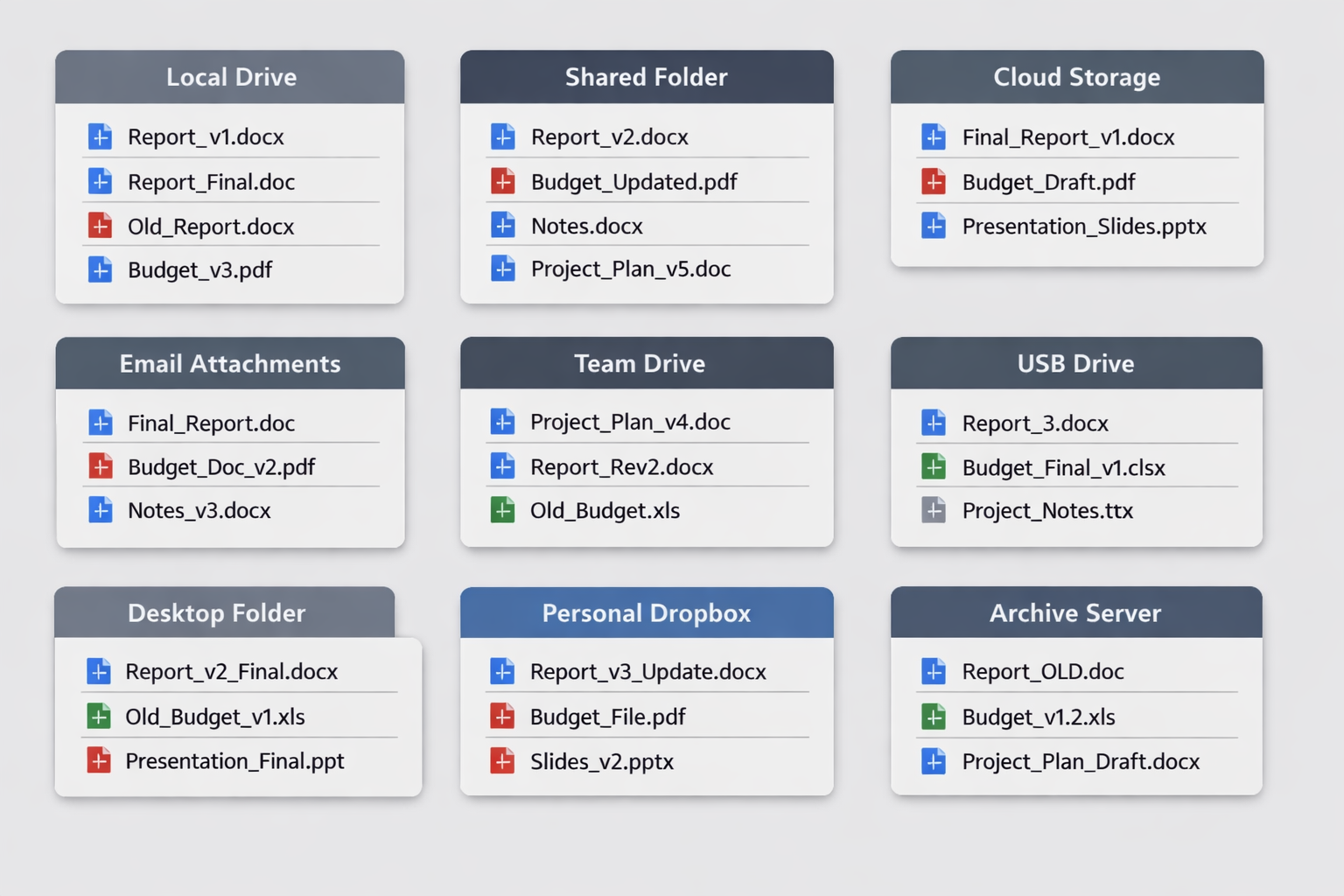
Version control has become a specific area of supervisory focus. Regulators assess whether organizations can demonstrate a clear and controlled history of document updates, including approvals and changes.
Supervisory findings often arise where:
Authorities such as the Central Bank of the UAE (CBUAE) emphasize that documentation supporting compliance activity must be reliable and traceable. Where version control is weak, supervisors often interpret this as an indication that governance processes are not consistently applied.
Supervisory inspections frequently involve time-bound requests for specific documents linked to compliance activities, client files, or internal processes. These requests often require immediate retrieval and validation.
A common inspection scenario involves:
Where organizations are unable to produce documentation promptly or provide incomplete or inconsistent records, supervisory engagement often escalates. Documentation gaps are frequently treated as indicators of broader operational and governance weaknesses, prompting extended review of internal controls.
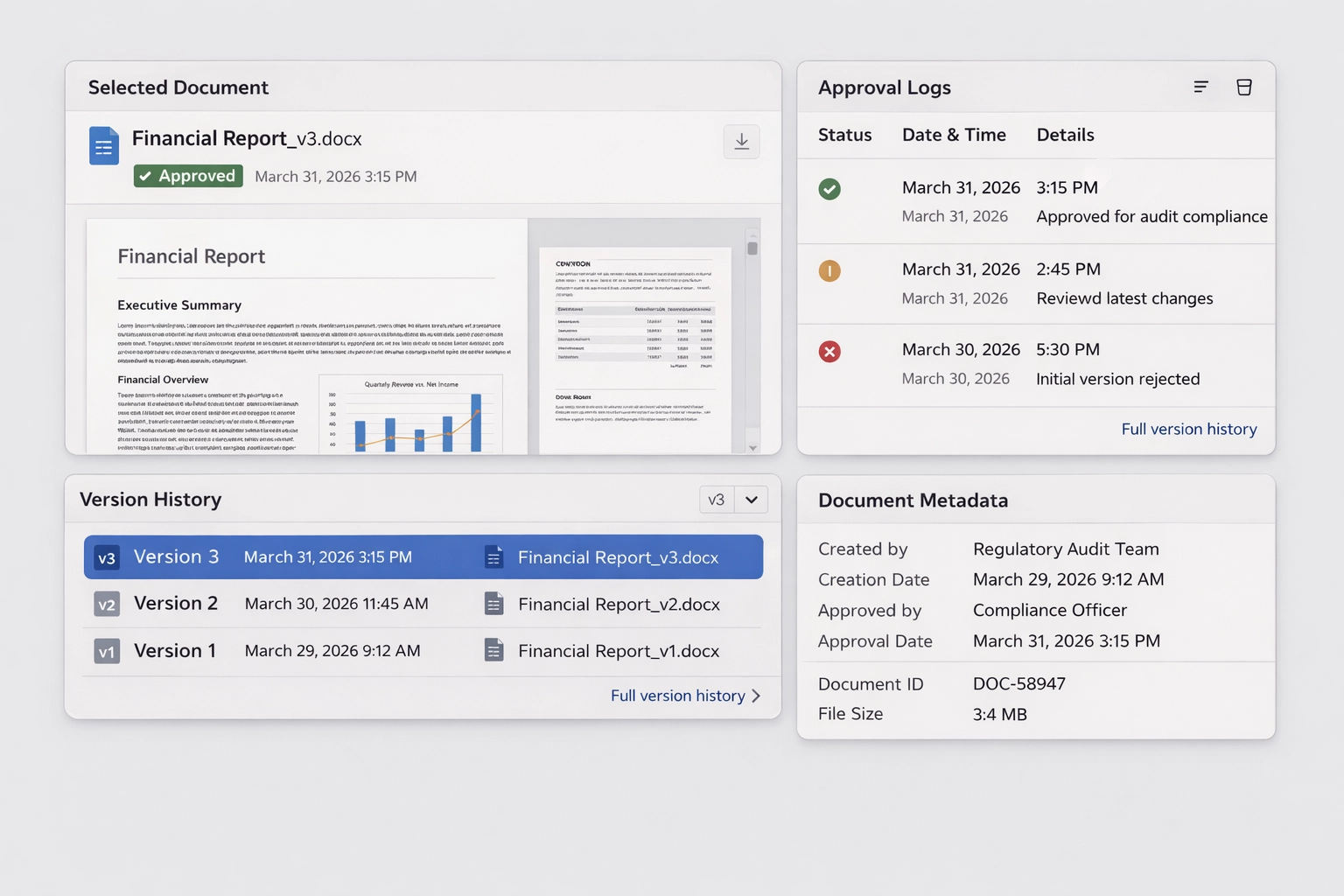
Supervisory expectations increasingly require that documentation is not maintained in isolation, but is directly linked to the operational processes it supports. Documents related to compliance, corporate activity, or client management must be connected to the relevant records and workflows.
Supervisory observations often highlight:
When documentation is not integrated with operational workflows, organizations often struggle to demonstrate how records support compliance outcomes during supervisory review.
Regulators increasingly assess document management as an ongoing control function rather than a static repository. This includes evaluating how documents are created, updated, reviewed, and maintained over time.
Effective document governance typically involves:
Organizations that treat document management as a passive storage function often encounter gaps that become visible during audits and inspections.
Supervisory reviews frequently reveal documentation gaps when document storage, version control, and operational processes are managed separately. In such environments, organizations are often unable to demonstrate whether records are complete, current, or linked to underlying activity.
Supervisory expectations increasingly require systems where:
Organizations addressing documentation control challenges often rely on structured operational platforms such as Moebius Software, which enable consistent document governance and defensible audit records.
Provide us with a bit of information about your business needs and we will be in touch to arrange a no commitment demonstration.


"*" indicates required fields