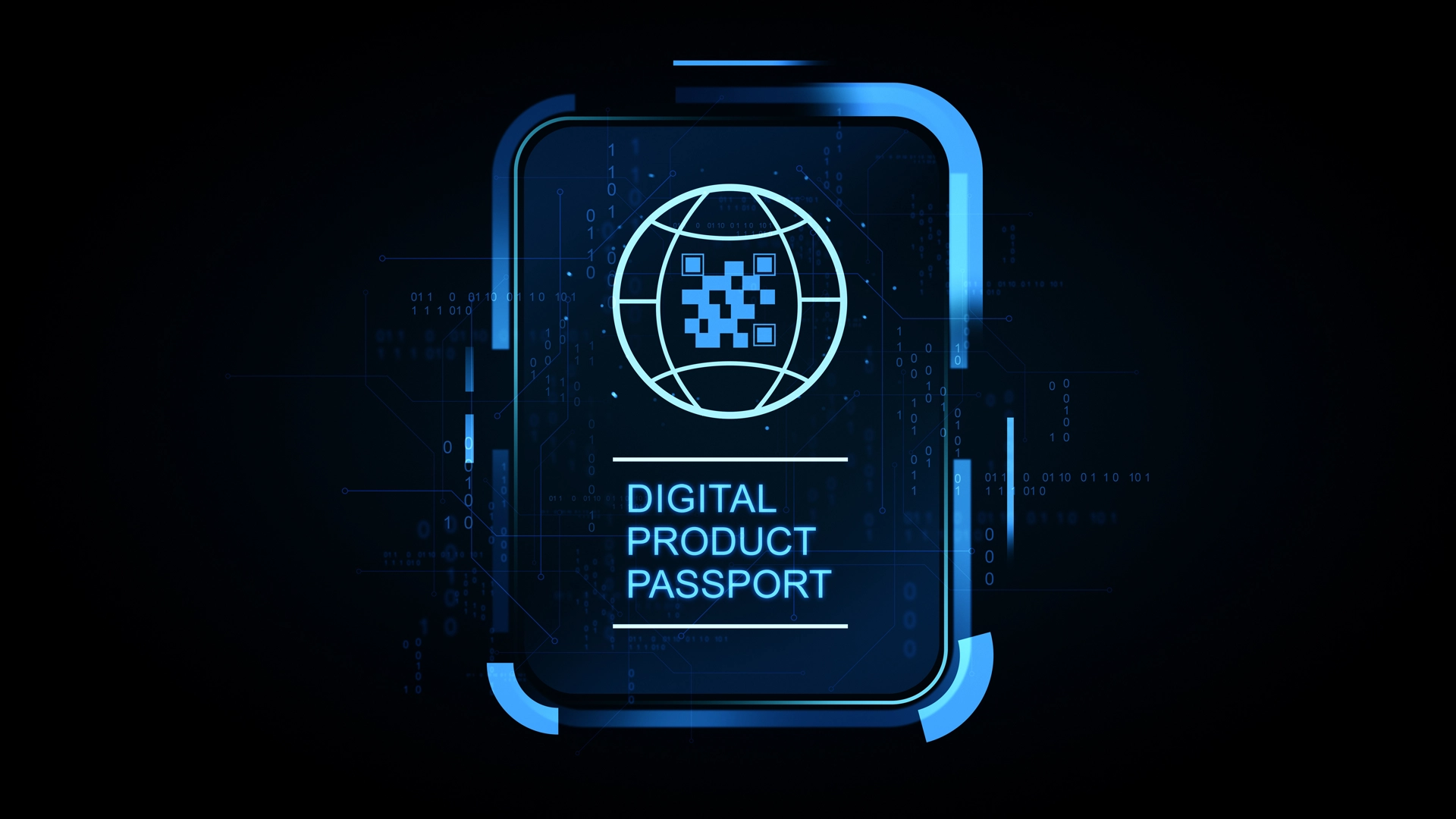
Cybersecurity is no longer just a technical consideration for businesses that develop or sell software-connected products. Across Europe, it is becoming an operational responsibility that extends from product design and development to vulnerability management, incident reporting, software updates, and ongoing maintenance.
The European Union’s Cyber Resilience Act (CRA) marks an important shift in how manufacturers must approach product security. Rather than treating cybersecurity as a one-time assessment before a product reaches the market, the regulation establishes requirements that apply across a product’s lifecycle. Businesses must consider how they identify vulnerabilities, address security issues, maintain updates, and demonstrate compliance.
The timing makes this particularly important. The CRA’s vulnerability and incident reporting obligations began applying on 11 September 2026, while its main product cybersecurity obligations are scheduled to apply from 11 December 2027. Manufacturers therefore face an immediate reporting responsibility alongside the wider preparation needed for the regulation’s full application. The European Commission has published official guidance on the CRA reporting obligations to help businesses understand these requirements.
For organisations developing software, connected devices and other products with digital elements, the challenge extends beyond implementing stronger technical safeguards. It also involves establishing the processes, records, responsibilities and evidence needed to manage product security consistently.
The central question is no longer simply whether a product is secure. It is whether the business can manage, maintain and demonstrate that security throughout the product’s lifecycle.

Traditionally, some organisations have approached product security through discrete activities: testing before release, conducting security reviews during development or addressing vulnerabilities when customers report them. These activities remain important, but they are not sufficient on their own to support the CRA’s broader lifecycle approach.
The regulation introduces cybersecurity requirements for products with digital elements made available on the EU market. Its scope covers a broad range of hardware and software products, subject to the regulation’s definitions, exclusions, and specific provisions.
For manufacturers, the requirements include addressing known vulnerabilities, applying appropriate security measures, providing security updates and maintaining processes for handling vulnerabilities throughout the product’s expected support period. Manufacturers must also provide relevant security information and documentation, as required by the regulation.
This changes how organisations need to plan product development and ongoing support.
Security decisions made during design must connect with development practices, testing, release management and post-market monitoring. When a vulnerability emerges after release, the business needs a process for assessing its impact, determining appropriate corrective action and communicating relevant information.
The CRA also has implications for the way organisations manage software dependencies. Products frequently incorporate third-party libraries, open-source components and external technologies. A vulnerability in one component can create a security issue for multiple products, even when the manufacturer did not develop that component itself.
Manufacturers therefore need sufficient visibility into the components used in their products and the processes required to respond when new vulnerabilities affect them.
The regulation does not make every organisation responsible for every security issue in the same way. Obligations depend on the organisation’s role, the product involved and the relevant provisions of the Act. Nevertheless, manufacturers need to understand where responsibility sits and how security-related decisions are documented.
One of the most immediate changes is the CRA’s reporting framework for actively exploited vulnerabilities and severe incidents affecting products with digital elements.
Since 11 September 2026, manufacturers have been required to report these events through the designated European reporting platform, subject to the regulation’s requirements.
The process includes several deadlines:
These deadlines are set out in Article 14 of the EU Cyber Resilience Act.
Meeting them requires more than a security team capable of identifying a problem. The organisation must also be able to coordinate the response, establish what is known, gather supporting information, identify corrective measures and submit the required notifications on time.
Consider a software manufacturer that discovers evidence that a vulnerability in one of its products is being actively exploited. Security specialists may identify the issue, but other teams may need to determine which product versions are affected, establish the potential impact, confirm whether a fix is available, and prepare information for the reporting process.
If those details are spread across development tickets, email conversations, spreadsheets and disconnected document repositories, assembling an accurate response can become unnecessarily difficult.
Incident response therefore depends on operational readiness. Businesses need clear ownership, escalation procedures, accessible records and a reliable way to coordinate technical and non-technical teams under time pressure.
Documentation is sometimes treated as an administrative activity that follows the completion of technical work. Under a lifecycle-based regulatory approach, this can create a significant gap between what an organisation does and what it can demonstrate.
Product security generates information at every stage of development and maintenance. Risk assessments, design decisions, test results, vulnerability records, remediation plans, software updates and support information may all contribute to the organisation’s understanding of a product’s security.
The challenge is keeping these records accurate, current, traceable and connected to the activities they describe.
For example, a manufacturer may have completed security testing but struggle to establish which product version was tested, which findings were resolved or whether the supporting evidence reflects the version currently available to customers. Similarly, a vulnerability may have been addressed by the engineering team without the corresponding records being updated across the relevant internal processes.
These are not necessarily failures of technical security. They are weaknesses in the way security-related work is recorded and managed.
A more robust approach connects documentation with the underlying workflow. Records should identify the relevant product, version, issue, responsible team, decisions made and corrective actions taken, as applicable. Changes should be traceable, and access to sensitive information should be controlled.
This is especially important when several teams contribute to product security. Engineering, product management, compliance, legal, customer support and leadership may each require different information, but they need to work from a consistent record of events and decisions.
Well-managed documentation does not, by itself, establish CRA compliance. It does, however, help organisations maintain oversight of their activities and produce the evidence needed for internal review, regulatory assessment and incident response.
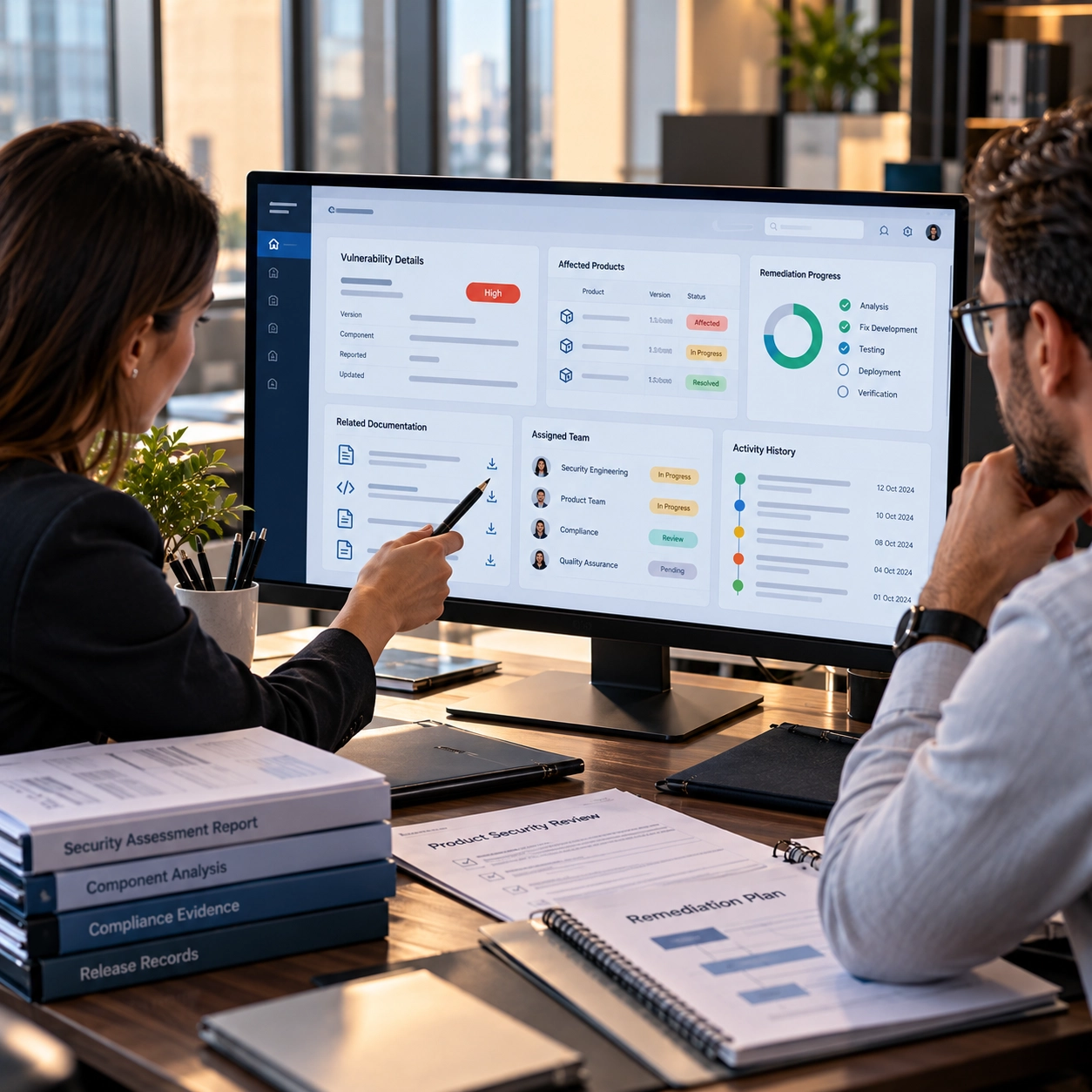
Modern software rarely exists in isolation. Commercial products often rely on third-party libraries, open-source software, external services and reusable components that are maintained by different organisations.
This creates a practical challenge for manufacturers: a vulnerability may originate outside their direct development environment but still affect a product they place on the market.
Businesses need a way to understand which components are used, identify when relevant security information becomes available and determine whether corrective action is necessary. They also need to establish who is responsible for assessing an issue, approving a response and communicating with affected stakeholders.
This becomes more complex when product portfolios include multiple versions, integrations and support arrangements.
A vulnerability management process that depends on individual employees remembering which products use a particular component is difficult to sustain as the business grows. Likewise, relying exclusively on email notifications or informal handovers can leave gaps between identifying a vulnerability and completing the necessary response.
A structured process can help connect component information with product records, risk assessments, remediation activities, and release decisions. Where appropriate, a software bill of materials (SBOM) can support visibility into software components, although maintaining an SBOM alone does not satisfy every CRA obligation.
The aim is to make security dependencies visible and ensure that information can move through the organisation without losing context or accountability.
Manufacturers should also distinguish their own responsibilities from those of other parties. The CRA contains specific provisions for different actors, including manufacturers and certain open-source software stewards. Businesses should assess the obligations applicable to their role rather than assume that every participant in the software supply chain has identical duties.
Preparing for the CRA is easier when product security is incorporated into established operating processes rather than managed as a separate compliance exercise.
Organisations can begin by mapping their products, identifying which products fall within scope and determining the applicable requirements. They should then assess how existing development, vulnerability management, incident response, documentation and support processes align with those requirements.
Several practical priorities can help structure this work.
Establish clear ownership. Define who is responsible for monitoring vulnerabilities, assessing their impact, coordinating remediation, approving decisions and managing required notifications. Ensure that responsibilities remain clear when multiple teams or external suppliers are involved.
Connect product and vulnerability records. Maintain reliable information about product versions, software components, known vulnerabilities, affected releases, and corrective measures. The level of detail should reflect the product, its risk profile and the applicable requirements.
Prepare incident reporting procedures. Establish escalation routes, decision-making responsibilities and internal response timelines that allow the business to meet applicable reporting deadlines. Internal processes should account for the time needed to validate information and coordinate the required response.
Maintain controlled documentation. Ensure that relevant security records, technical documentation, approvals, and remediation evidence can be located, reviewed, and updated appropriately. Version control and access permissions are particularly important where information is sensitive or changes frequently.
Integrate security into product maintenance. Define how vulnerabilities are monitored, how updates are developed and distributed, how support periods are managed and how decisions are recorded throughout the product lifecycle.
Review the process regularly. Products, dependencies, threats and organisational responsibilities change. Periodic reviews help identify outdated records, unclear ownership and gaps between documented procedures and actual practice.
These measures should be proportionate to the organisation’s products and obligations. They also need to fit into the wider development and support environment. A process that exists only in a policy document but is not followed in day-to-day operations will offer limited practical value.
As product security becomes more closely connected with documentation, accountability and operational workflows, businesses may need to reconsider how they manage the information supporting those activities.
This is where systems for document management, workflow coordination and audit trails can contribute to the wider control environment.
For example, Moebius Document Management provides centralised document storage, search and retrieval, document workflows, approval processes, versioning and configurable access controls. These capabilities can help organisations structure records, manage document changes and make relevant information easier to retrieve.
The broader Moebius software platform also includes audit trails and configurable access controls that support accountability and oversight across business processes.
For organisations managing substantial volumes of security-related documentation, such capabilities may help organise supporting records, maintain controlled workflows and improve visibility into how information is handled.
However, an important distinction remains: document management software is not a substitute for product security engineering or a complete CRA compliance solution. It does not independently determine whether a product meets the regulation’s technical requirements, detect exploited vulnerabilities or fulfil manufacturers’ reporting obligations.
Businesses still need appropriate technical security capabilities, vulnerability monitoring, incident response arrangements and regulatory expertise. Any document management or workflow platform should be assessed against the organisation’s specific requirements, integrations and operating model.
The value lies in connecting the administrative and evidential side of compliance with the technical work being performed, rather than allowing the two to operate independently.
The CRA should not be approached solely as a deadline-driven exercise. Its lifecycle requirements point towards a more sustained approach to product governance, where security responsibilities continue after a product is released.
This has implications for how businesses allocate resources, manage suppliers, maintain records, and coordinate teams. It also creates an opportunity to identify weaknesses in existing processes before they become visible during a security incident or regulatory review.
For manufacturers, the most useful preparation is practical. They need to understand which requirements apply, determine how responsibilities are assigned, establish how evidence is maintained, and test whether their processes work under realistic conditions.
The reporting obligations already applicable since September 2026 make incident readiness an immediate priority. The broader application date of December 2027 provides a further milestone for preparing the relevant product security processes and controls.
Organisations should use this time to close gaps in both technical capability and operational coordination, while keeping track of applicable official guidance and any further implementation developments.
Ultimately, product cybersecurity is no longer just a matter of protecting software against attacks. It also requires businesses to maintain the systems, processes and records that support security decisions throughout a product’s life.
Under the EU Cyber Resilience Act, stronger product security and stronger operational discipline go hand in hand. The organisations best prepared will be those that can not only address vulnerabilities, but also demonstrate how security is managed, maintained and governed over time.
Provide us with a bit of information about your business needs and we will be in touch to arrange a no commitment demonstration.


"*" indicates required fields